Londor
Solo Project ● Unreal Engine Block-out
About the Level
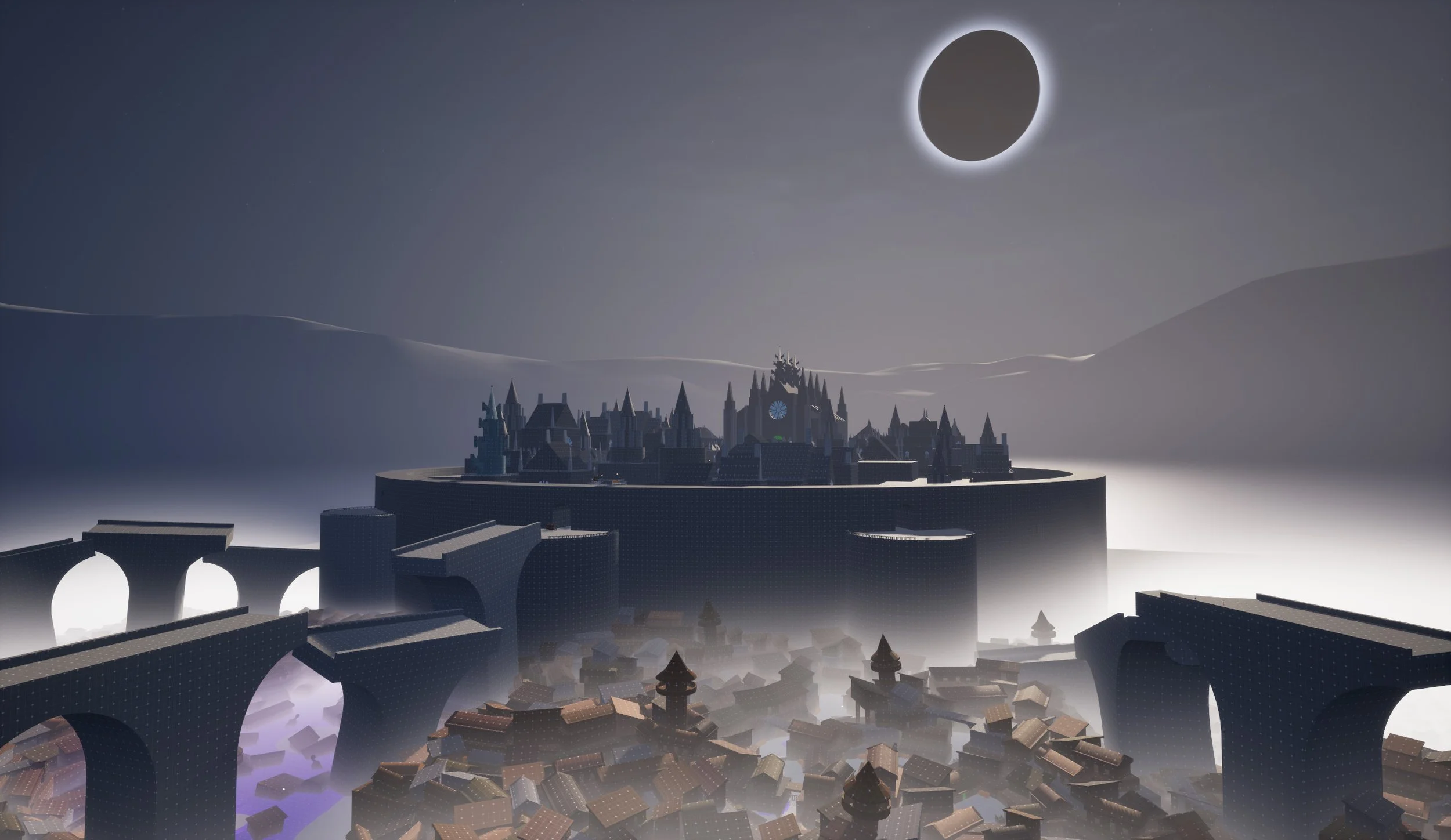
Responsibilities: Designed, scripted, sequenced, iterated on, and playtested a DLC level for Dark Souls III based on the story location, Londor.
Software Used: Unreal Engine 5.7, Photoshop, Illustrator, Perforce, Miro
Asset Packs Used: Essential Great Sword Animation Pack (player animations and animation blueprint), Boss Enemy Animation Pack (strong melee enemy attack animations), Ultra Dynamic Sky (skybox)
Designed and scripted a custom gameplay pack from scratch
~24 minutes of gameplay with varied pacing and combat encounters
Design Intentions
Create a DLC-style level featuring numerous combat encounters, multiple unique settings, and a side quest that alters the level ending
Improve scripting, in-engine modeling, and level sequencing skills
Use composition to create visually striking moments throughout the level
Design a boss and arena that fit the level’s aesthetic and complement the gameplay template
Develop a storyline that fits the themes of Dark Souls III and communicate it through gameplay, environmental storytelling, and NPC dialogue
Replicate the feel of Dark Souls III by scripting a full gameplay template from scratch, including enemy AI, player/enemy damage systems, item pickups, and spell casting
FULL Playthrough
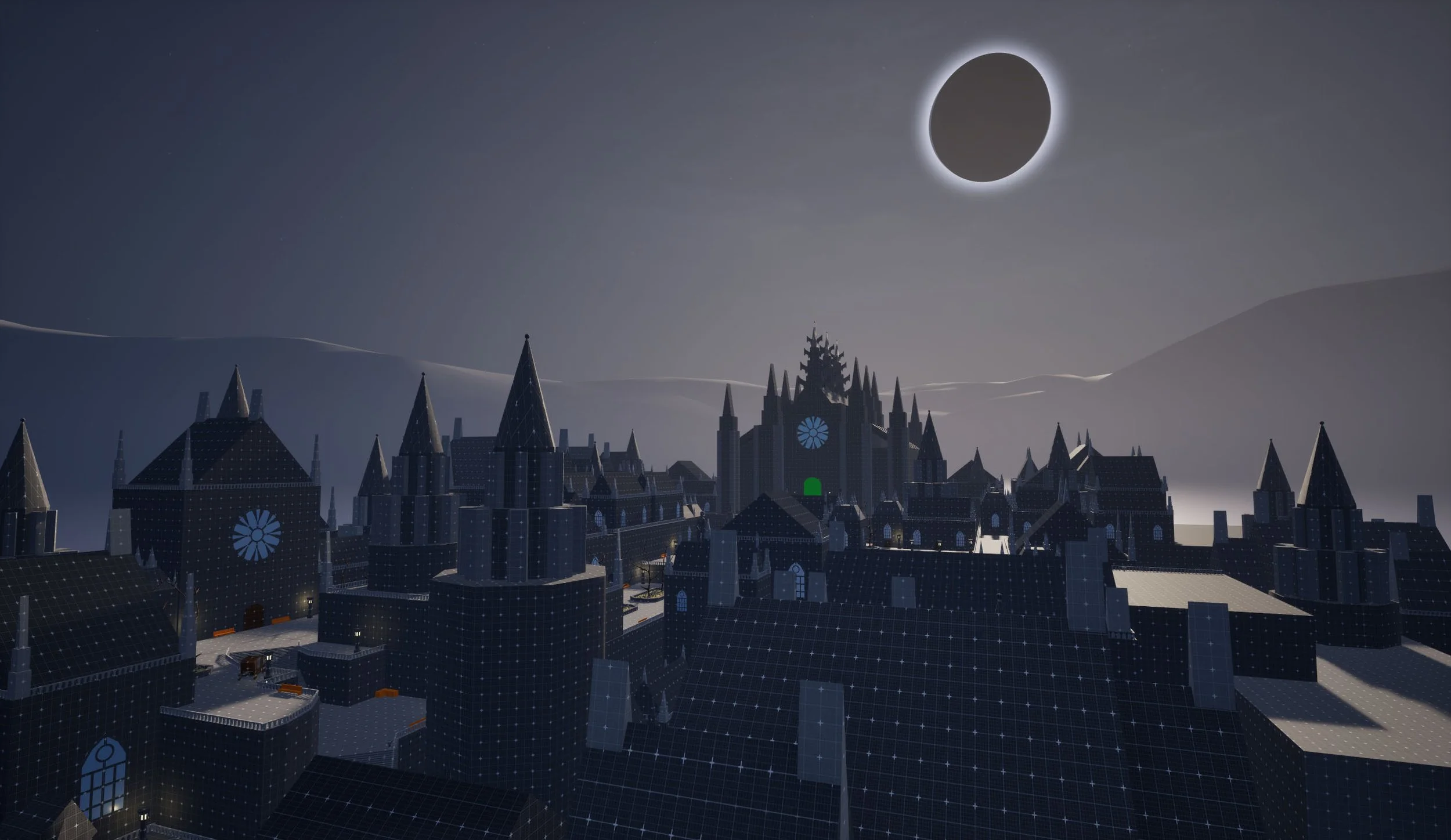
Layout
Blueprints
View the gameplay pack and supporting Blueprints created for this level below.
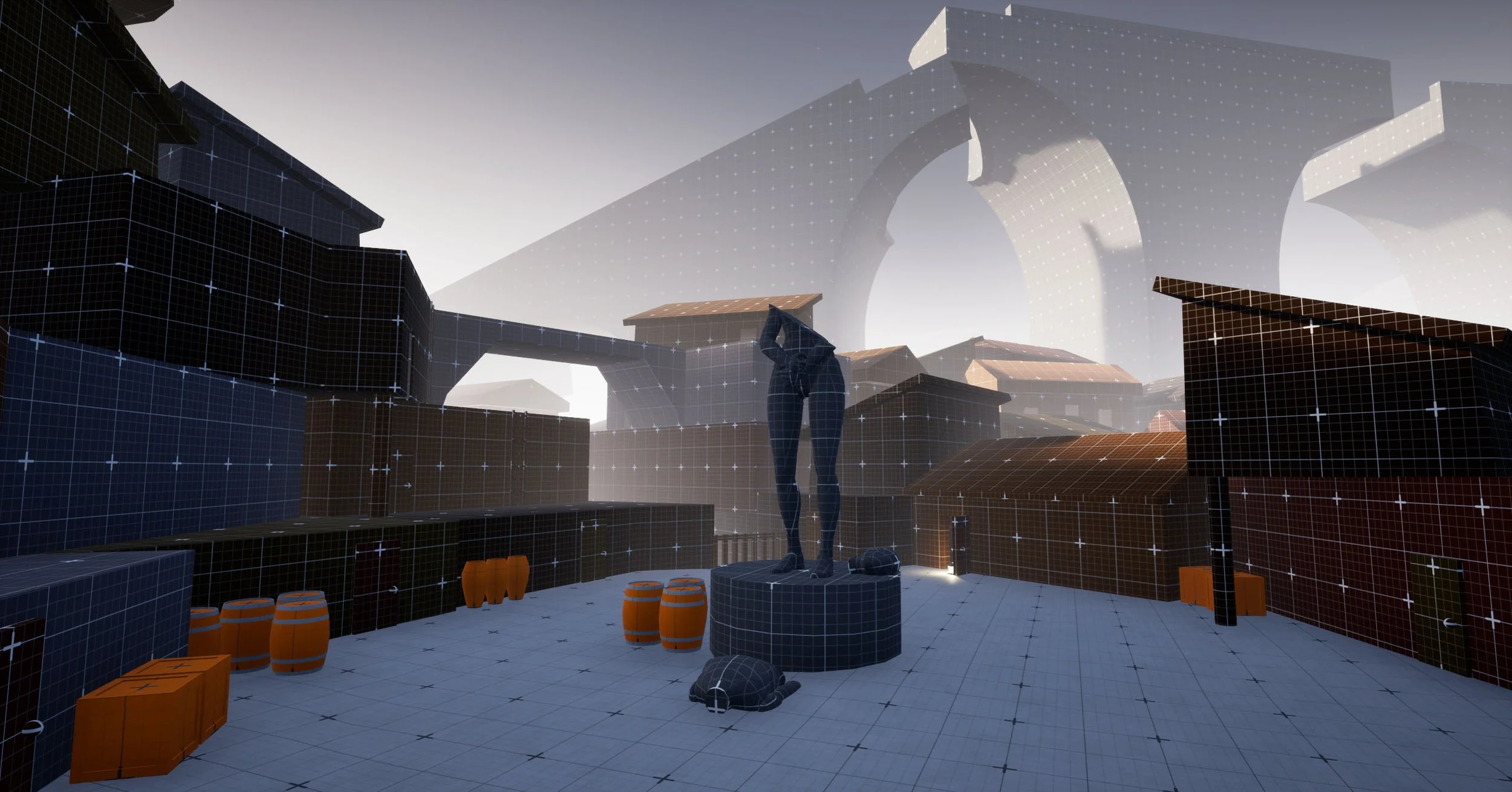
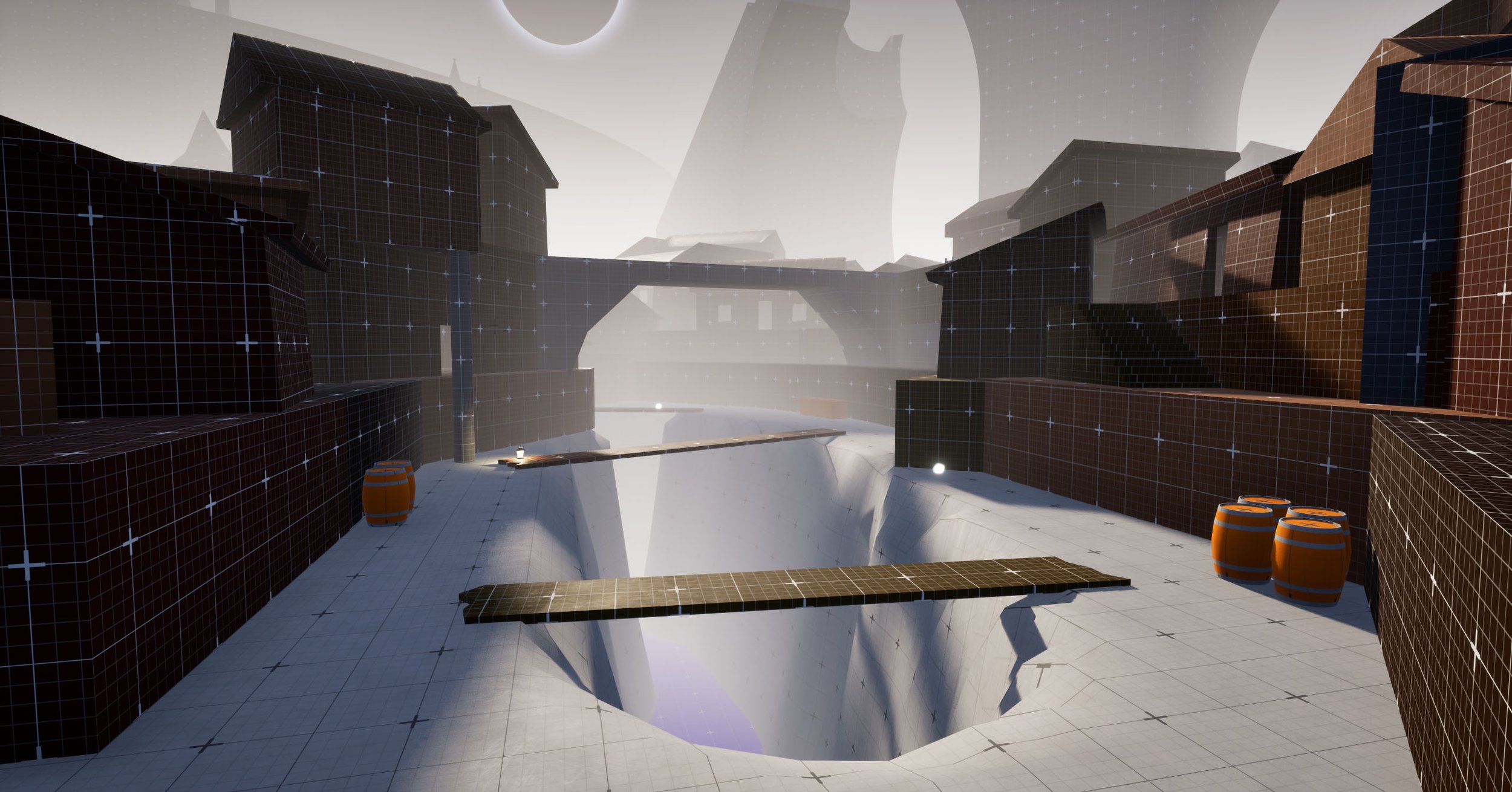
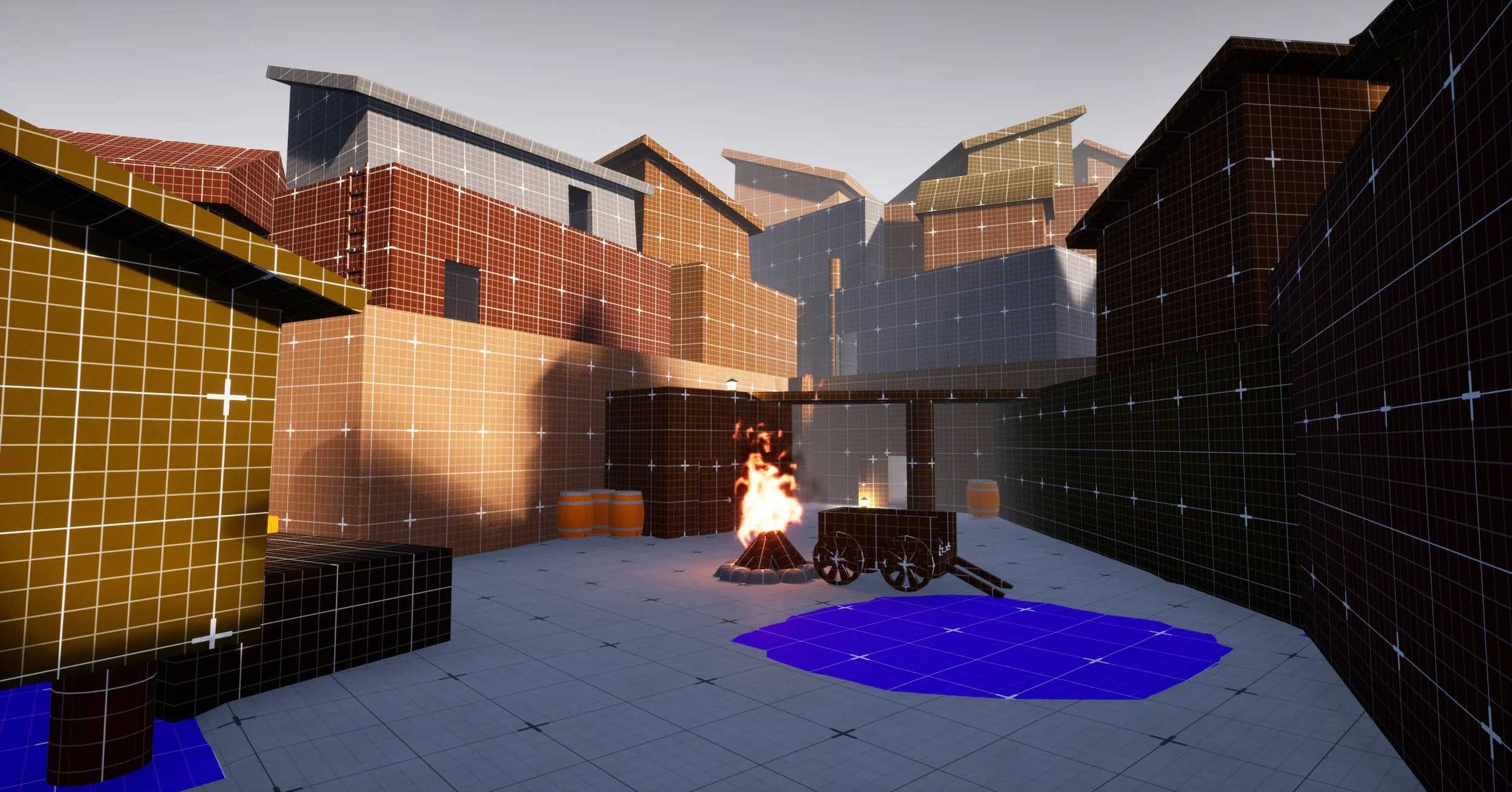
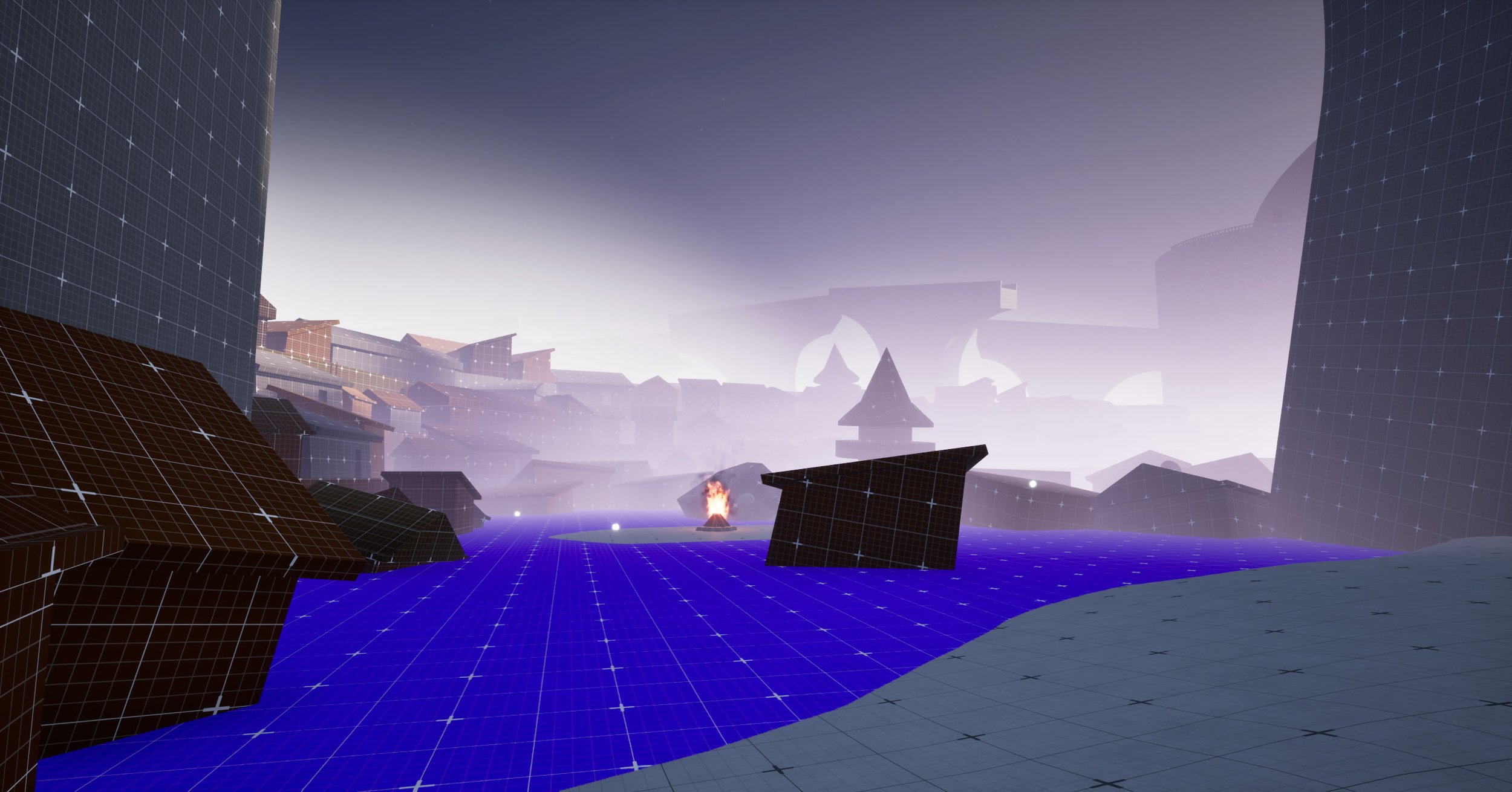
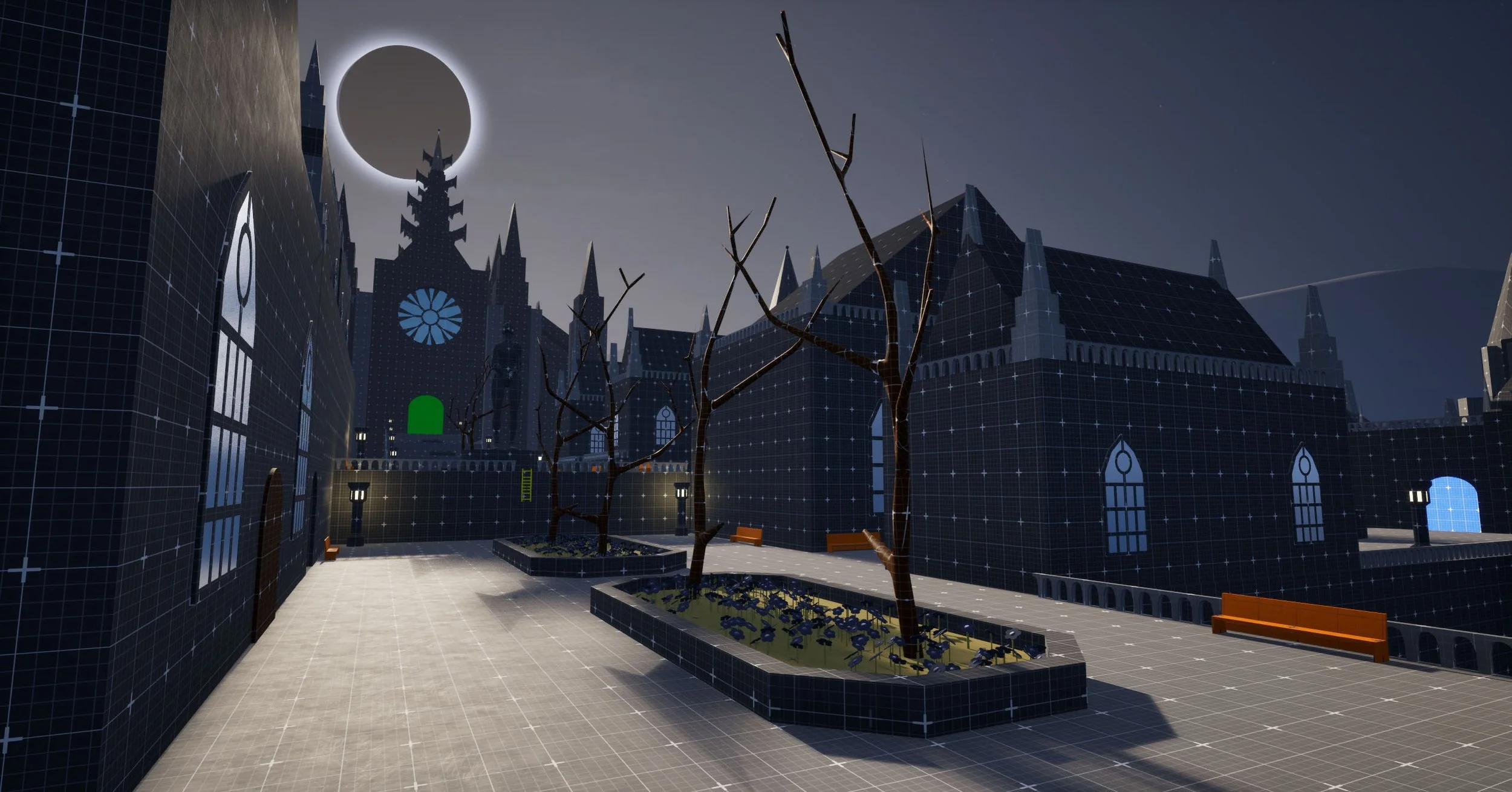
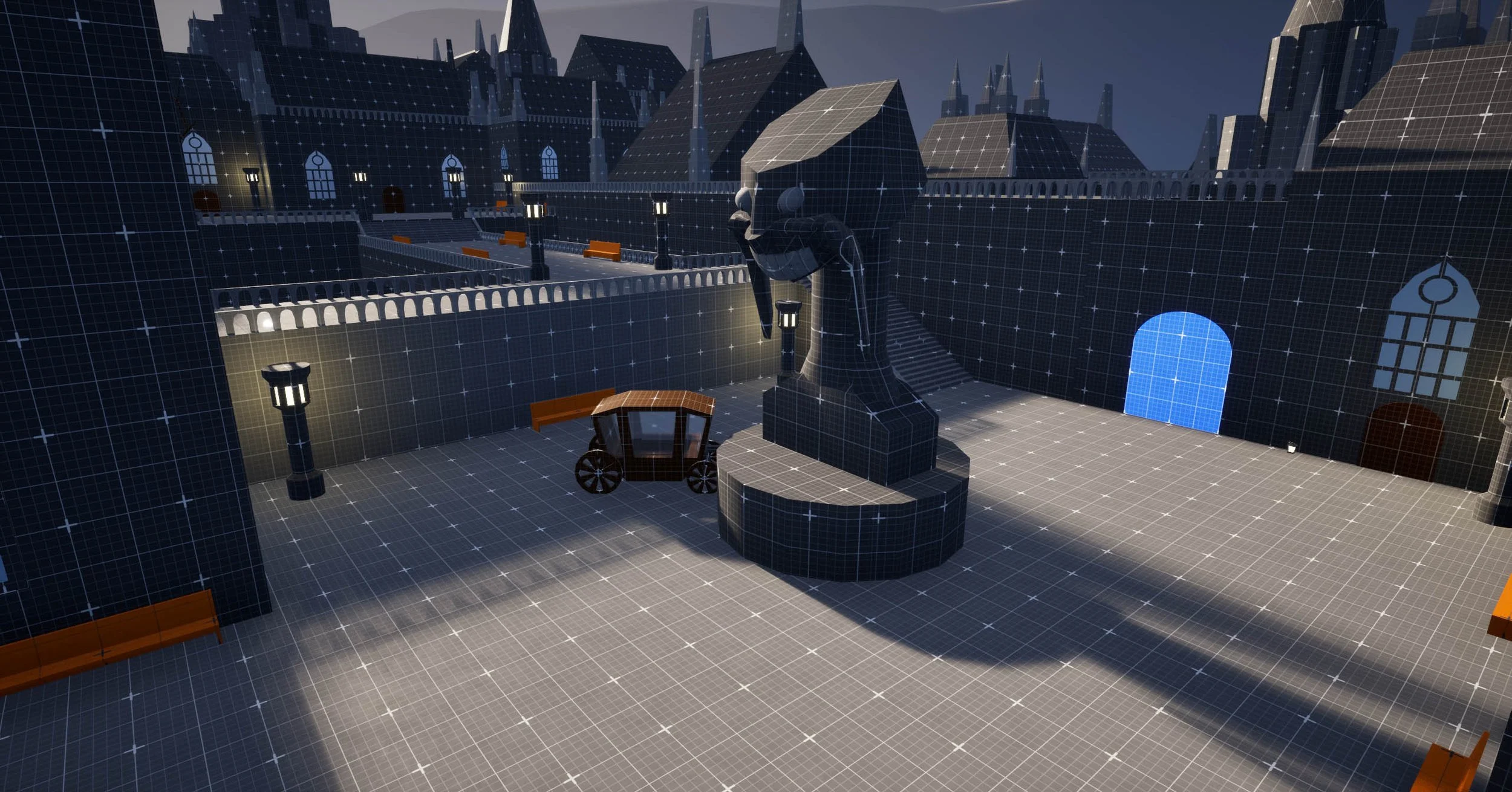
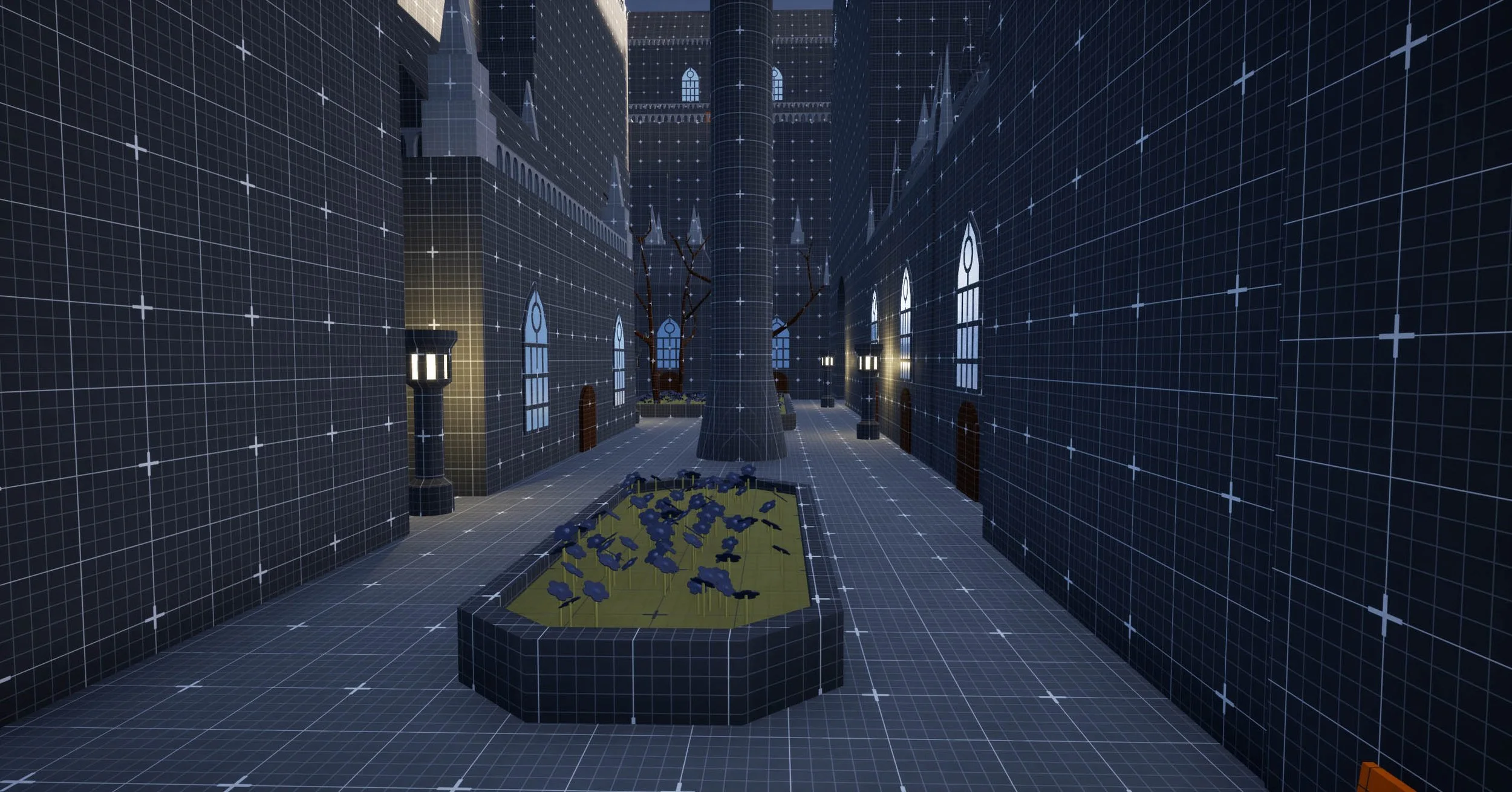
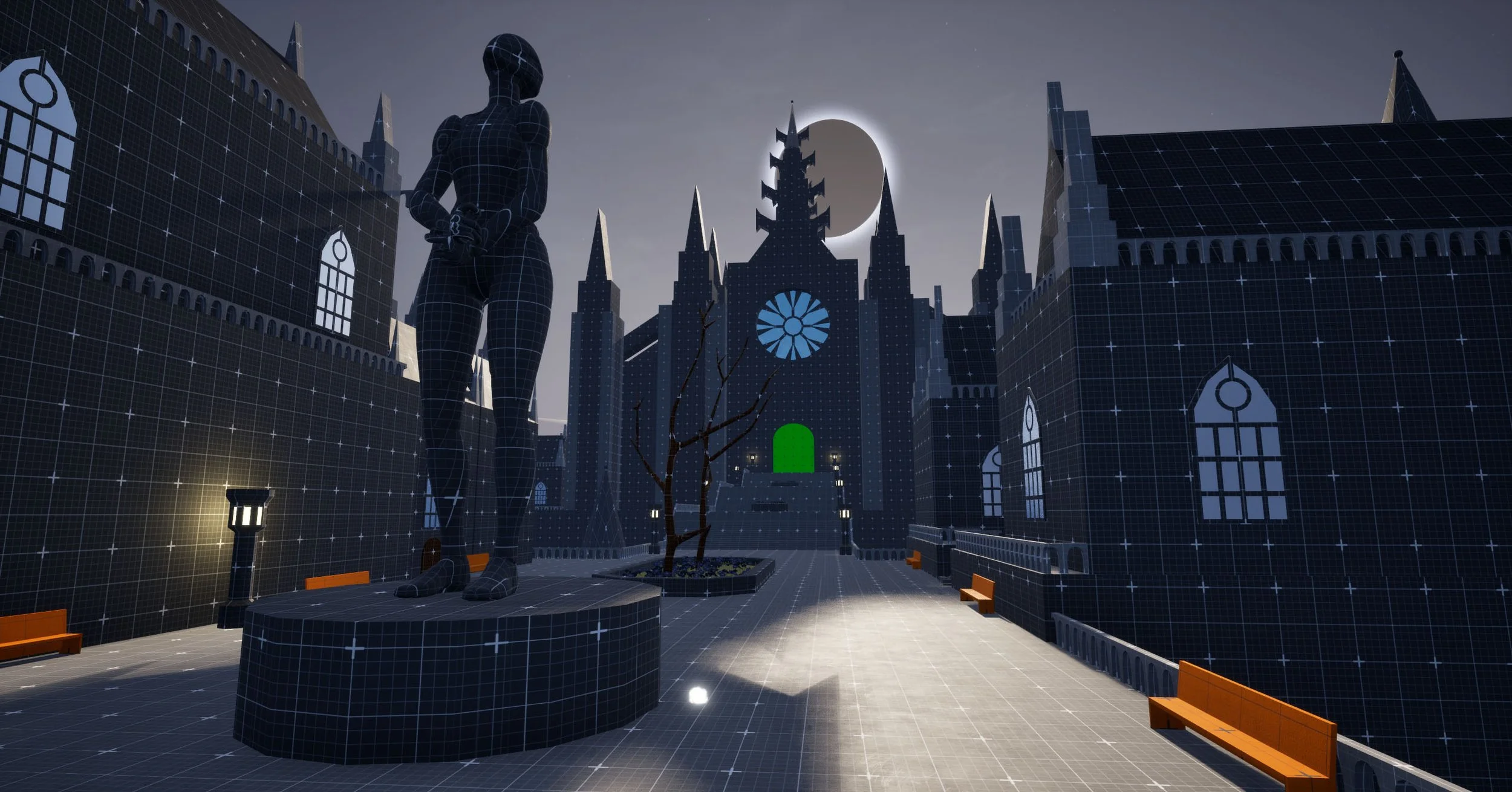
Design Process and Iterations
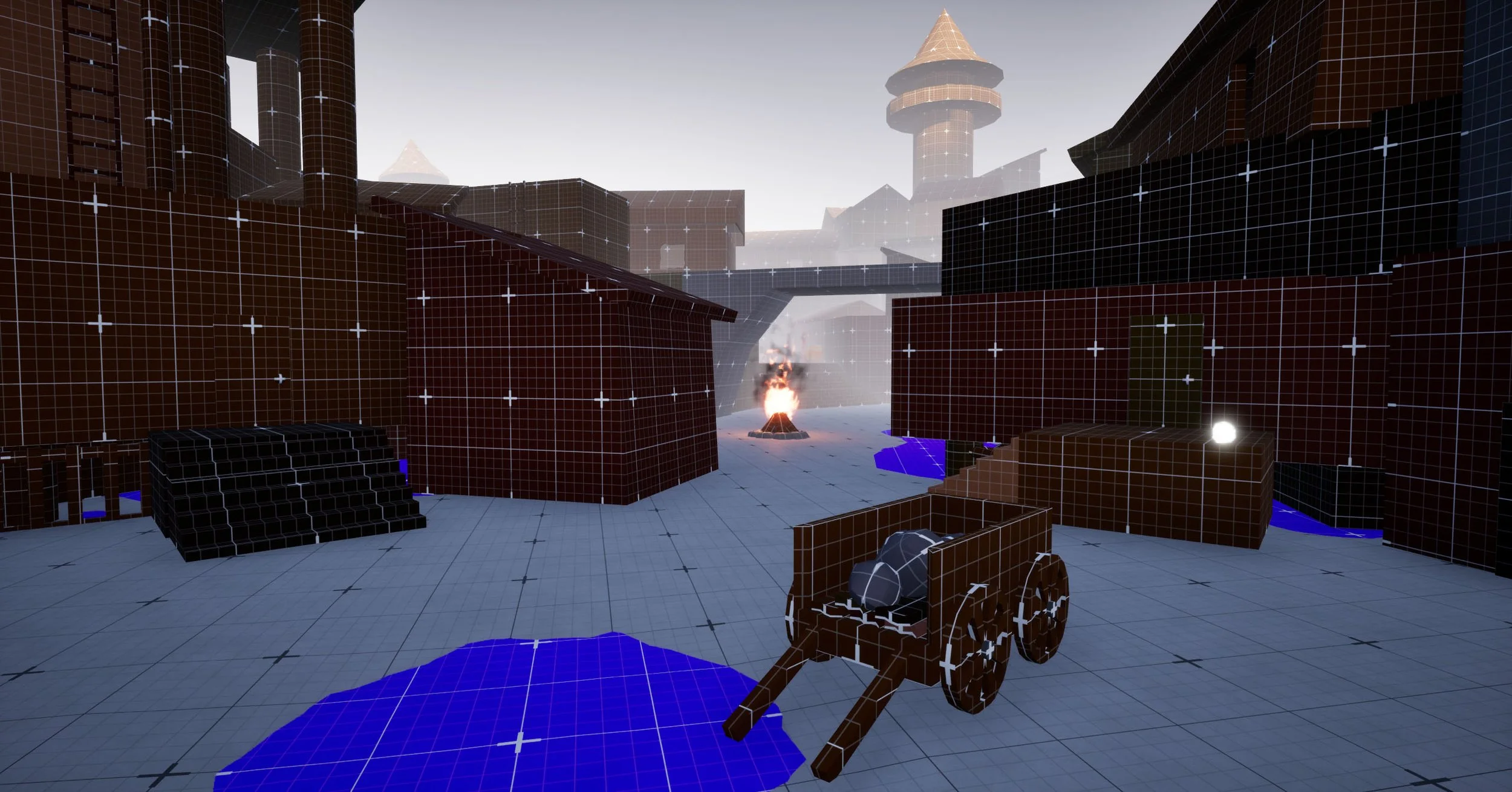
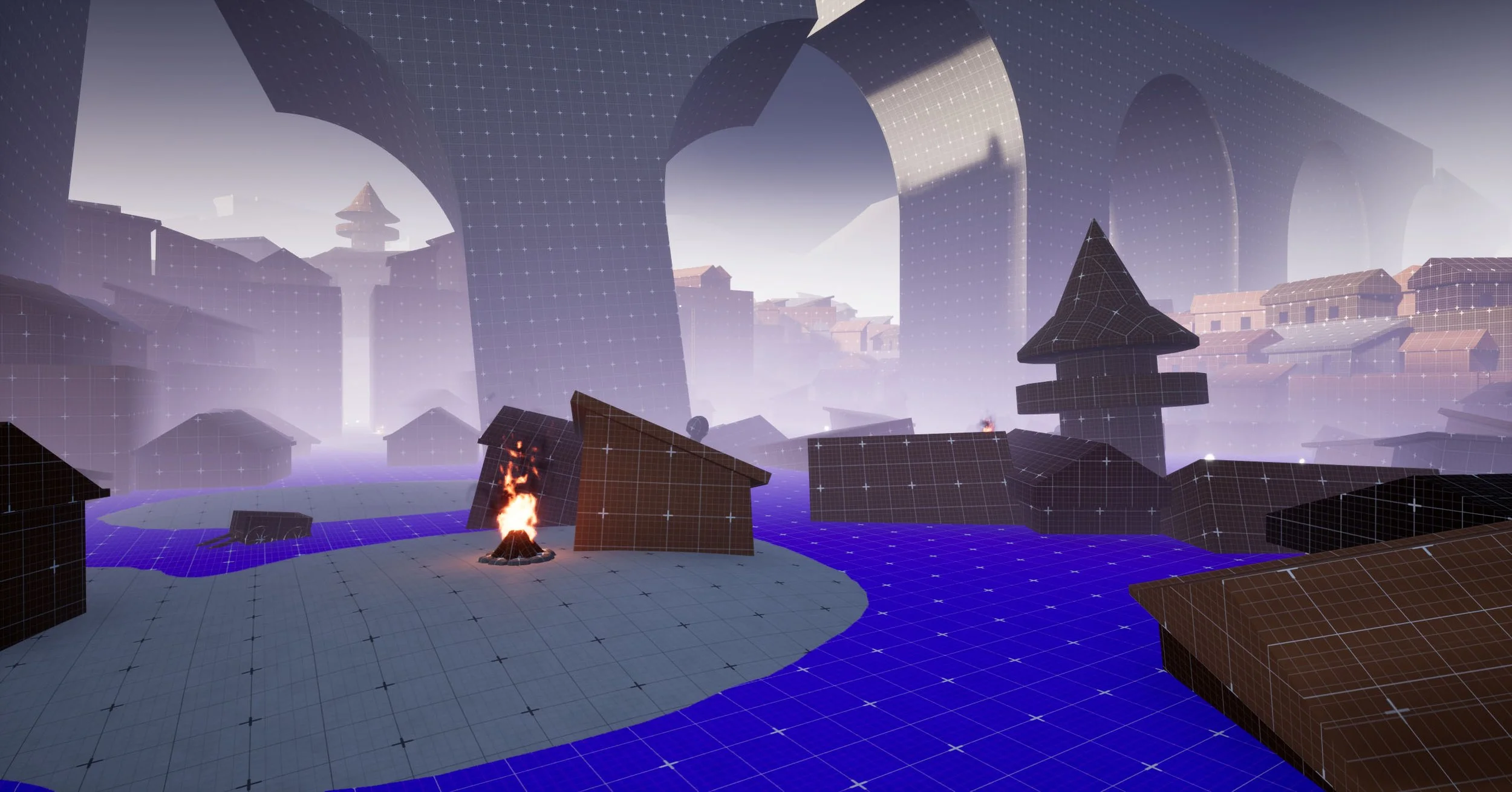
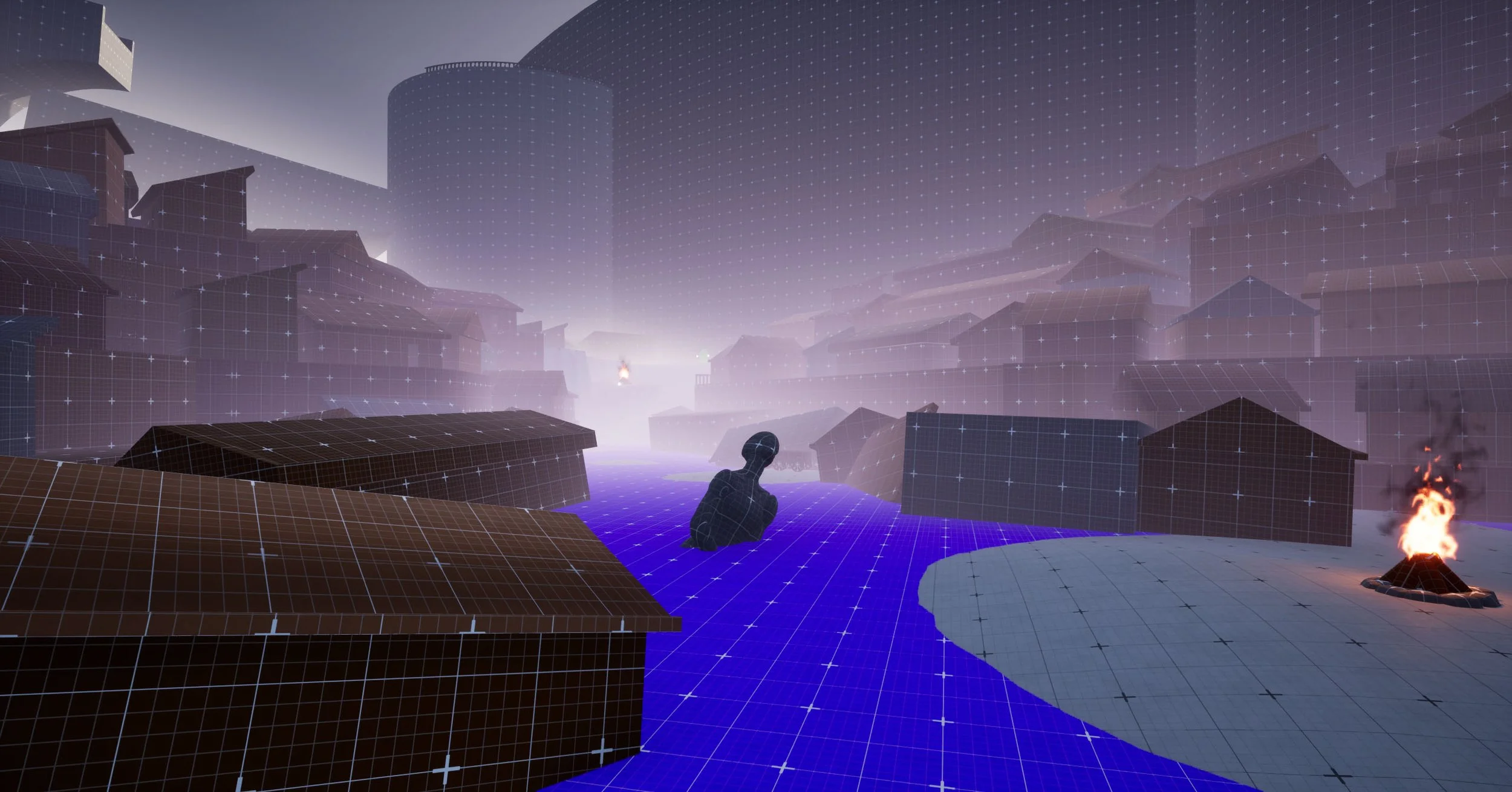
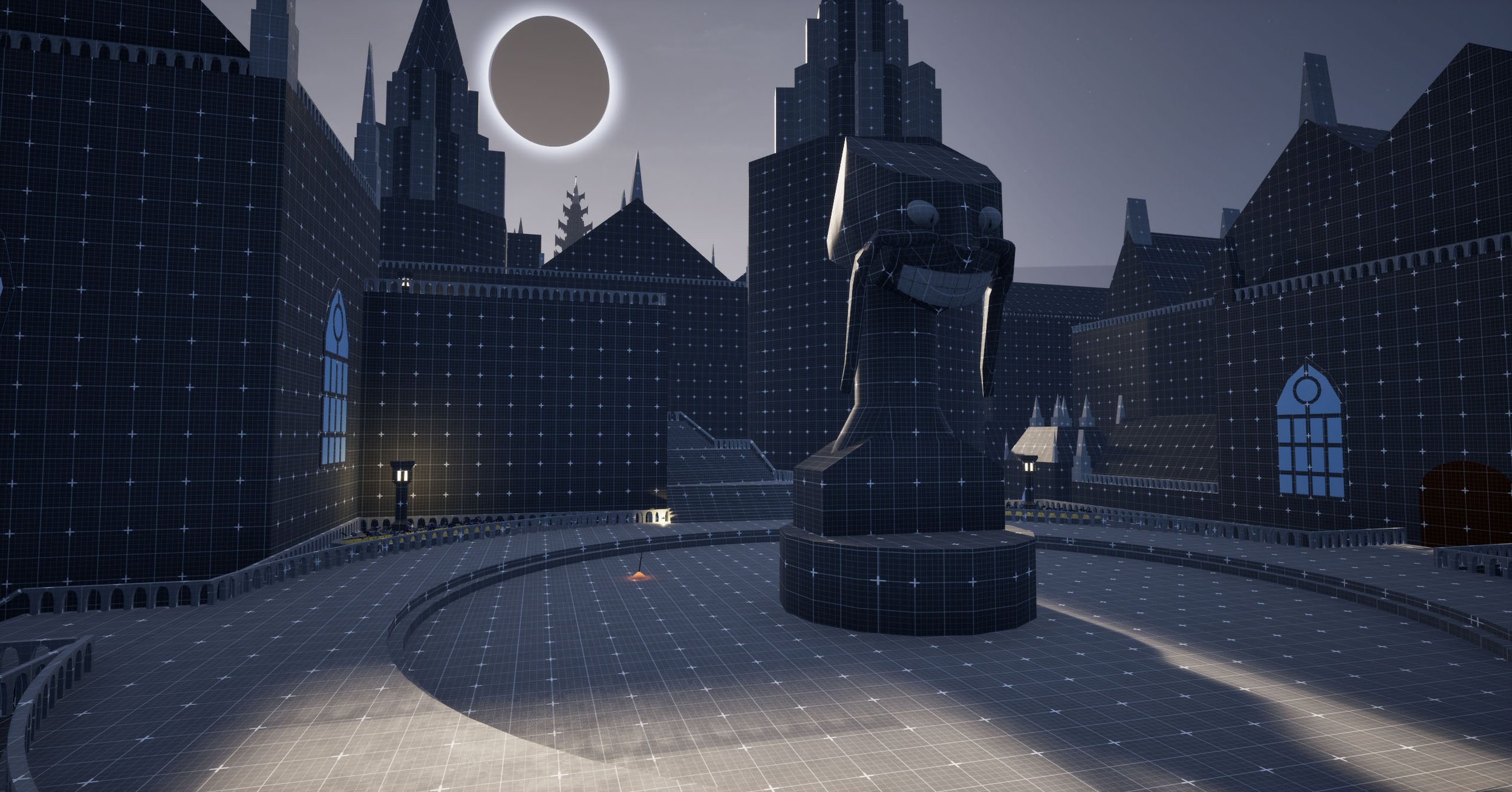
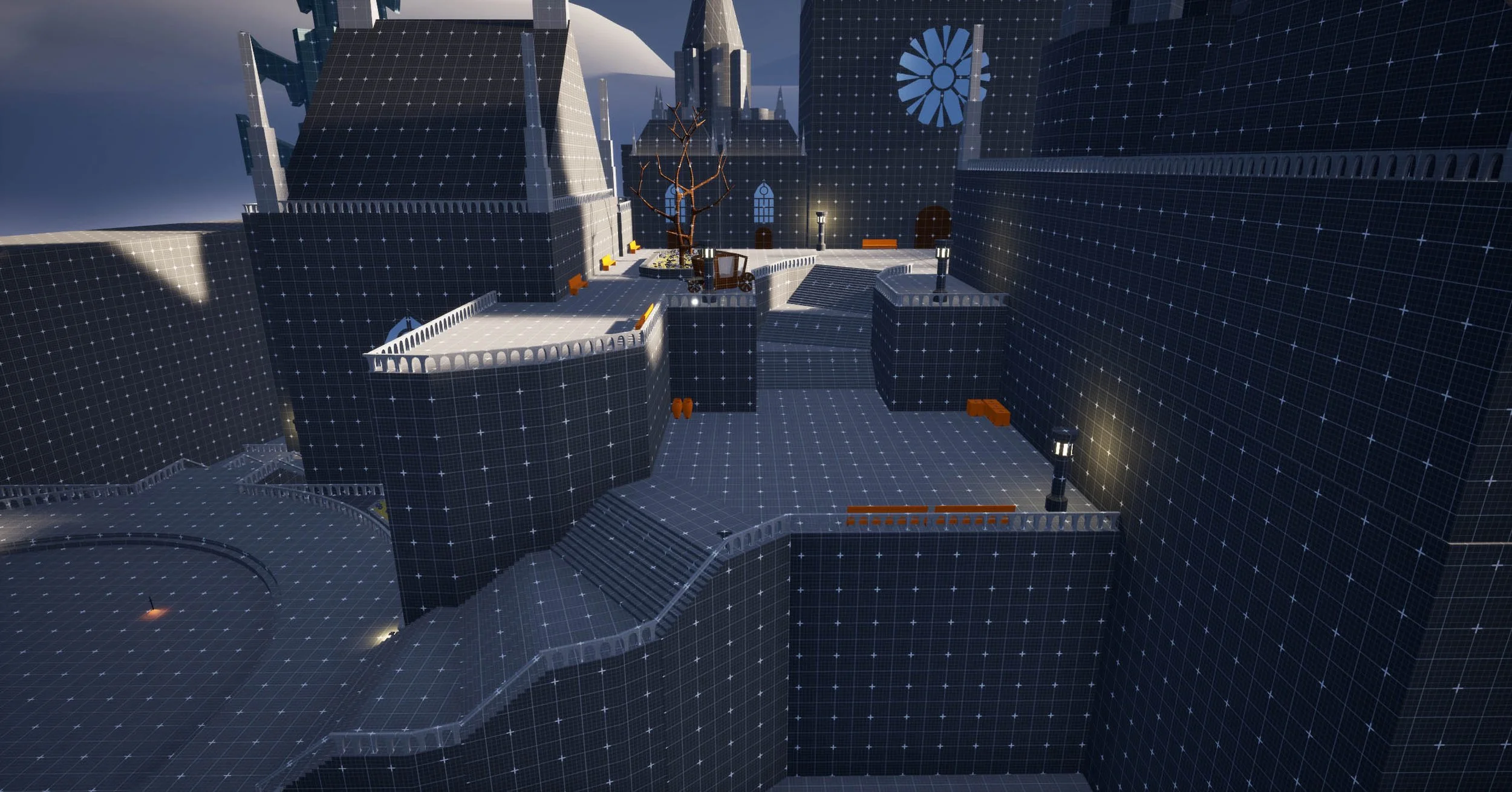
My goal for this level was to design and block out a DLC area for Dark Souls III based on the story location of Londor while also developing a gameplay pack to support it. I began by creating a Miro board with both in-game and external references to establish the level’s setting, narrative direction, and overall flow. When designing the top-down map, I referenced Dark Souls III’s design pillars and existing levels to shape the spaces, ranging from winding streets to open swamp environments.
Metrics
After creating my map and Miro board, my next step was finalizing the metrics of my level, such as door, wall, and stair dimensions. To do this, I created a metrics gym to help establish the measurements I would be using.
Some metrics include:
Player walk/jog speed - 4.2 m/s
Player run speed - 6.5 m/s
Small doorway - 2.1 m tall x 1.2 m wide
Medium doorway - 2.8 m tall x 2.2 m wide
Large doorway - 5.6 m tall x 4.4 m wide
Small wall height - 3 m
Medium wall height - 7.5 m
Giant wall height - 18 m
Stair dimensions - 0.2 m tall x 0.3 m deep
Max distance the player can run through swamp water before getting poisoned - 56 m
Initially, I wanted players to be able to move freely around the level, as the initial rendition of the prisoner side quest required the player to move back and forth throughout the level. I found that this amount of backtracking took away from the great pacing that Borderlands 4 levels have, so I deviated from my first map as soon as I got in engine.
I also iterated on the individual combat encounters multiple times to make their gameplay more exciting and support Borderlands 4’s design pillars more. Below, I compare and contrast early versions of my combat encounters to their finalized counterparts.
Iteration - Improving early level flow
Old
The player started in the western side of the level
The level opened with a long run across a large, flat bridge
Reaching the Hollow Village required a sudden 90° turn to descend an elevator
Progression required a large loop through the level, disrupting the flow
New
The player now starts at the southernmost point of the level
The bridge run is shorter and includes more varied gameplay
An NPC interaction occurs at the beginning of the bridge
Broken bridge segments require the player to drop between sections, creating more engaging gameplay
Level flow is more natural, with the player primarily progressing north through the space
Iteration - Clarifying the Critical Path
Old
When exiting the door, the player only sees the path that leads to the Hollow Village bonfire shortcut
The critical path (a ladder next to the door they exited) is not immediately visible
The intended behavior was for the player to turn around and re-enter the building, where they would then notice the ladder
Because the shortcut path is the only visible route, players may incorrectly assume it is the way forward
New
When exiting the door, the player can immediately see both the ladder and the bonfire shortcut path
An item is visible inside the shortcut building, drawing attention to that route
In Dark Souls III, visible items often signal optional paths, subtly suggesting that the ladder is the critical route
If the player takes the ladder first, they reach an overlook that reveals a previous area near the Hollow Village bonfire
A small walkway with an item draws the player toward the edge of the overlook
From this position, the player can directly see the Hollow Village bonfire
This reinforces the spatial connection of the level and hints that the alternate path will open the shortcut door the player saw earlier
Iteration - Streamlined area transitions
Old
The transition between the Hollow Village and Londor City was a crypt area with a bonfire and three rooms filled with enemies
An elevator at the end of the crypt transported the player to Londor City
An illusory wall behind the elevator contained a weapon pickup
Each room used the same layout, resulting in repetitive gameplay
The setting did not logically fit within the level
The unique environment was very short, making the area feel underdeveloped
New
The crypt setting was removed
The transition between the Hollow Village and Londor City is now a short hallway
The elevator to Londor City and the illusory wall with the weapon pickup were preserved
Removing the crypt creates a cleaner and faster transition between the two areas, improving the overall level flow