Steelwater Platform
Solo Project ● Unreal Engine Block-out
Trailer
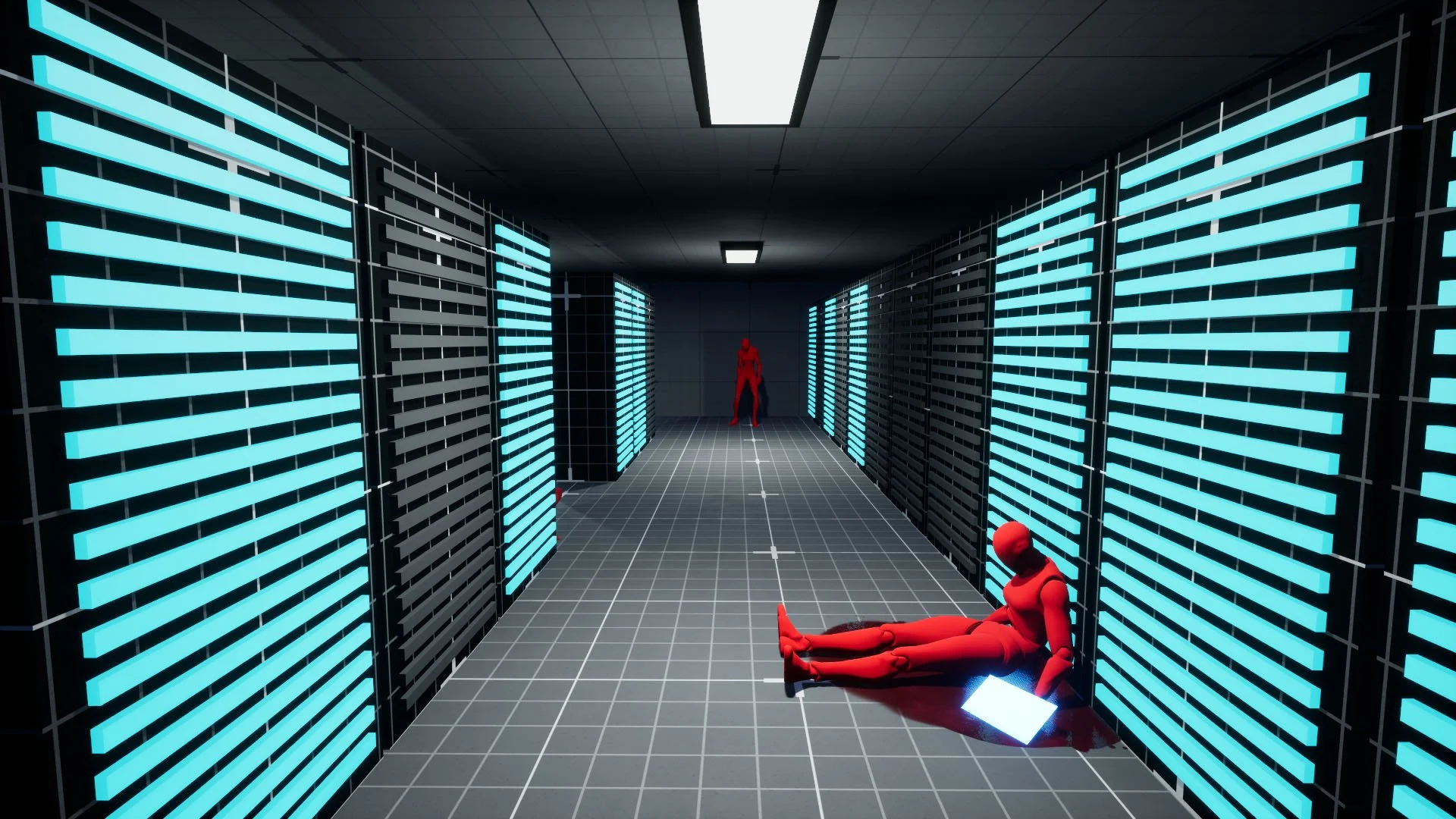
About the Level
Responsibilities: Designed, scripted, iterated, and playtested a survival horror level that takes places on an offshore oil rig inspired by the Resident Evil game series
Software Used: Unreal Engine 5.8, Illustrator, Perforce, Miro
Asset Packs Used: Advanced Survival Horror (enemy AI and weapons), Ultra Dynamic Sky (sky box)
Utilized my Procedural Wall Tool to rapidly create and modify interior spaces, allowing me to efficiently iterate on room layouts throughout development
~12 minutes of gameplay with varied pacing and combat encounters
Design Intentions
Create a survival horror level that features an interconnected layout, escalating tension, varying combat encounters, and a climactic boss fight that keeps the player on their toes
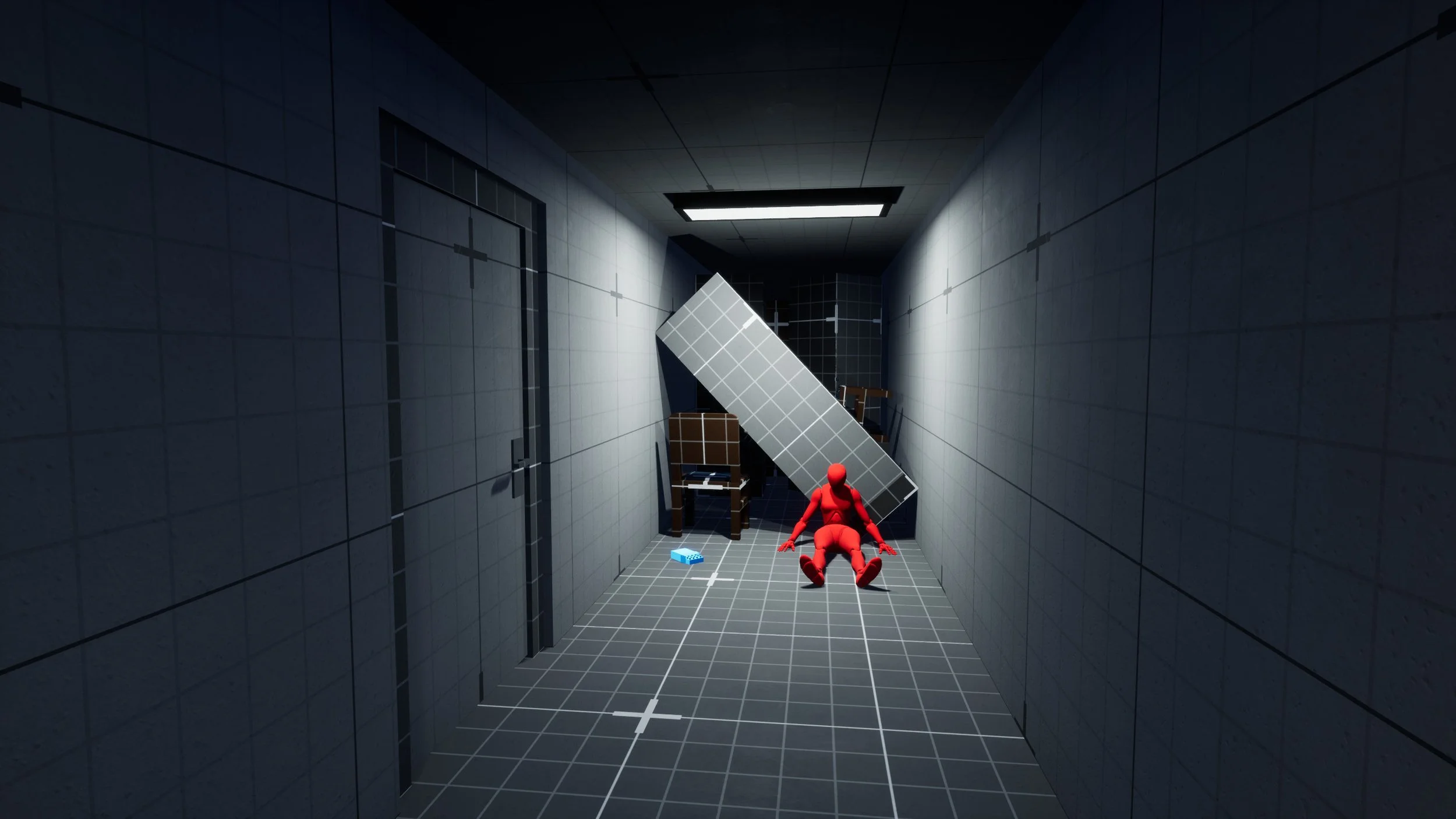
Utilize tight corridors, low ceilings, and negative space to make the player feel trapped in their environment
Design a complex boss encounter that complements the simple AI of the Advanced Survival Horror enemies
FULL Playthrough
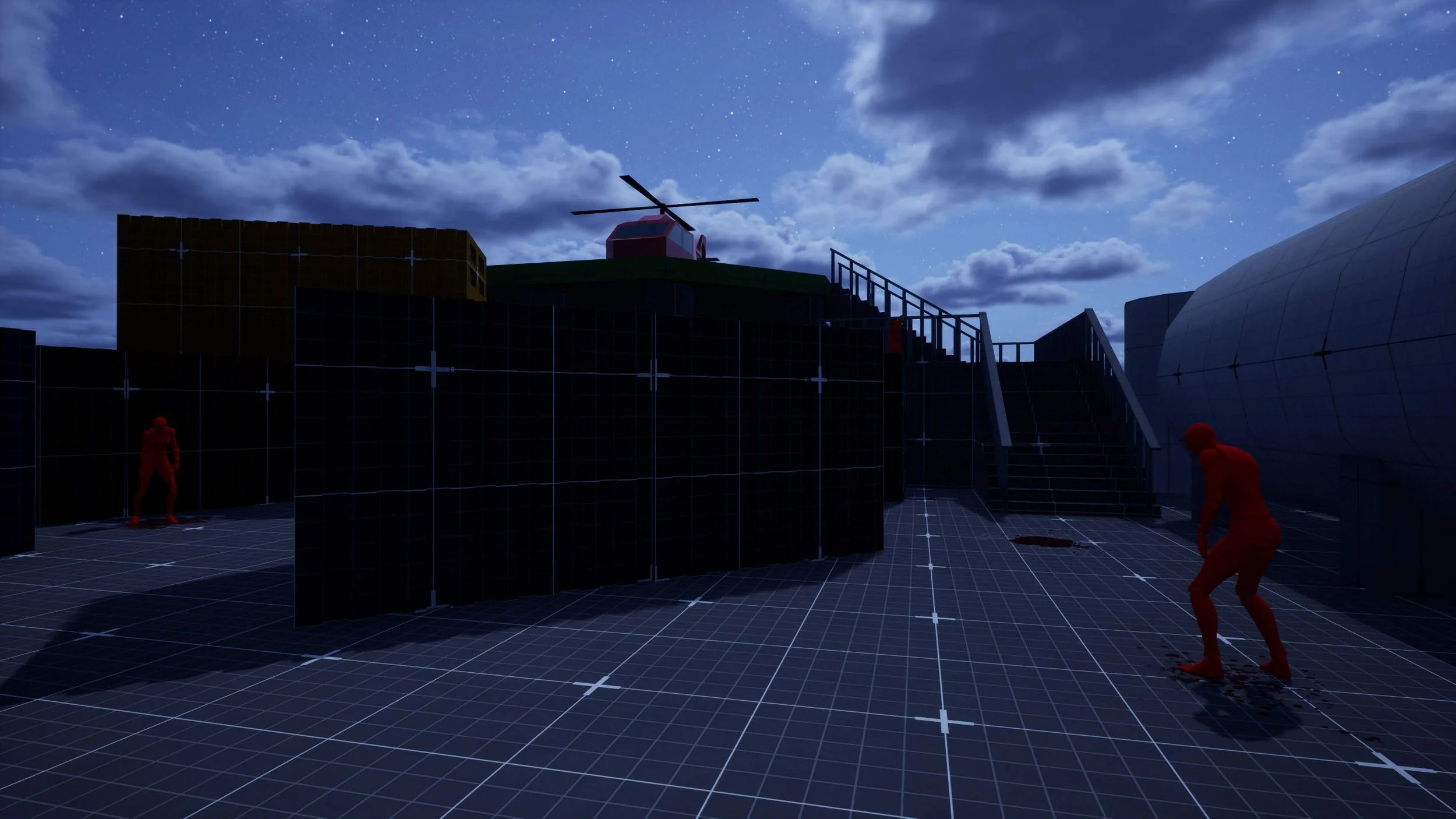
Area Breakdown and Iterations
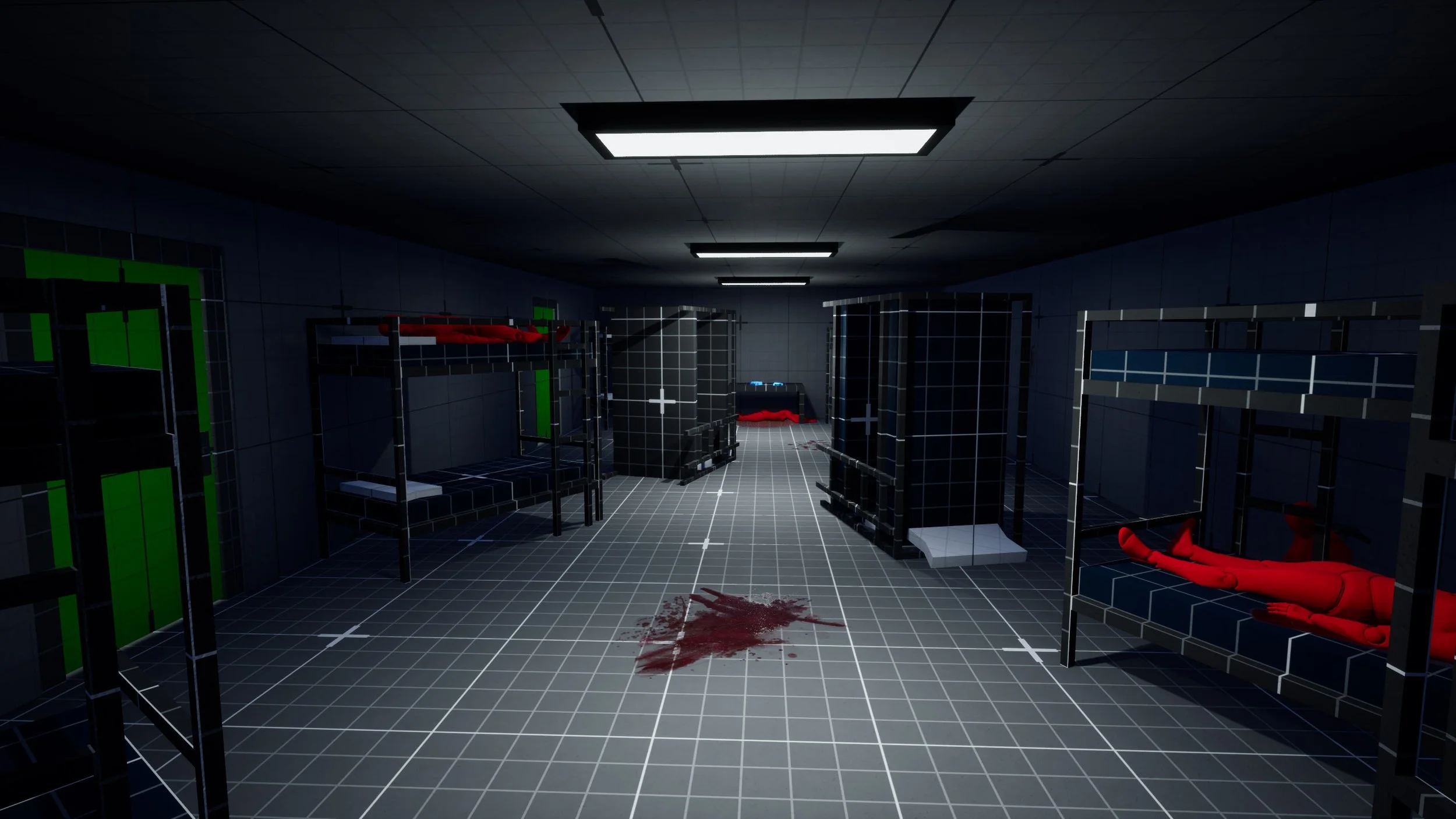
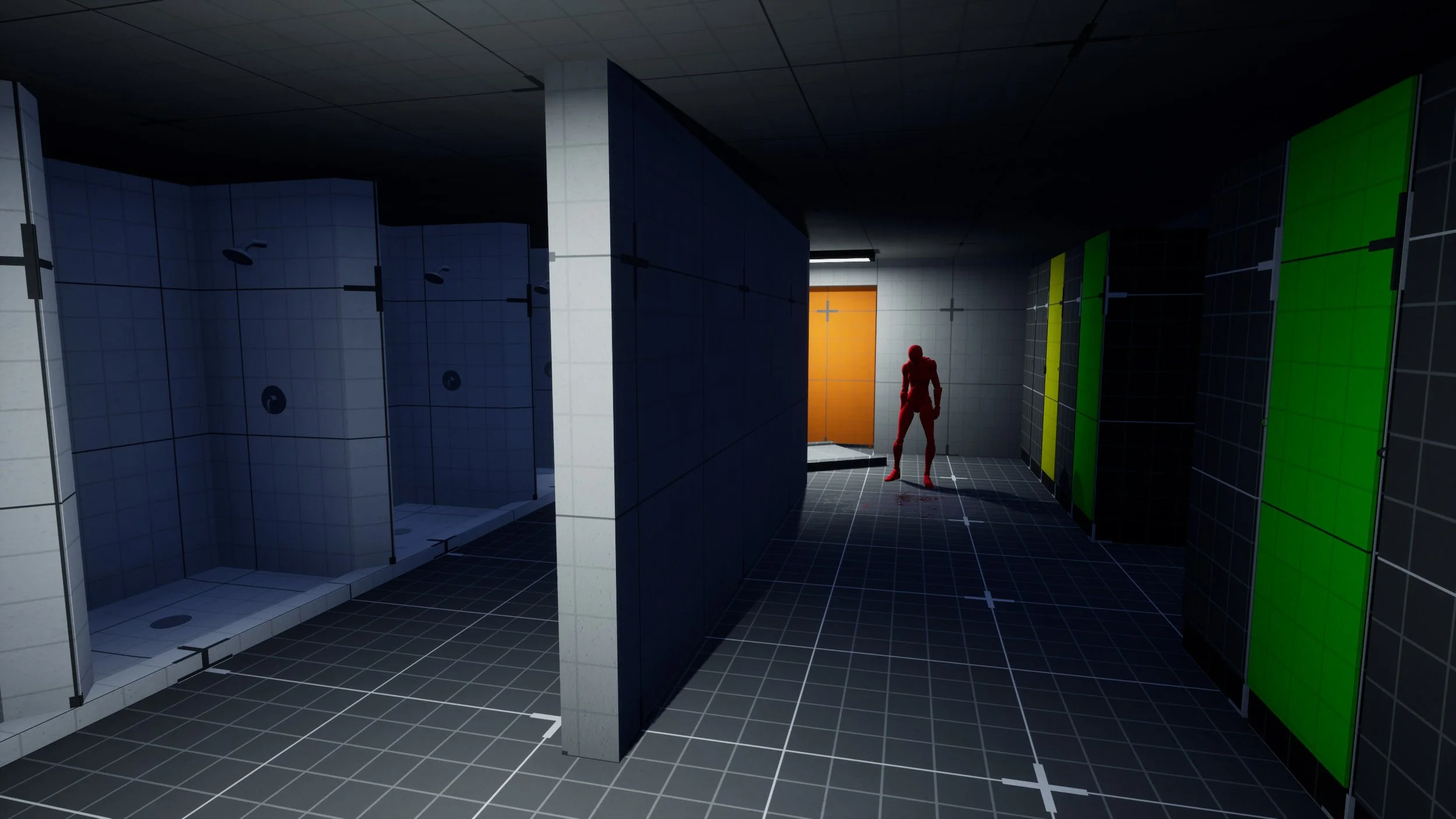
Beat 1 - Living Quarters and Cafeteria
Creates early-game tension through tight spaces and cramped rooms while maintaining simple encounters to ease players into the core gameplay loop
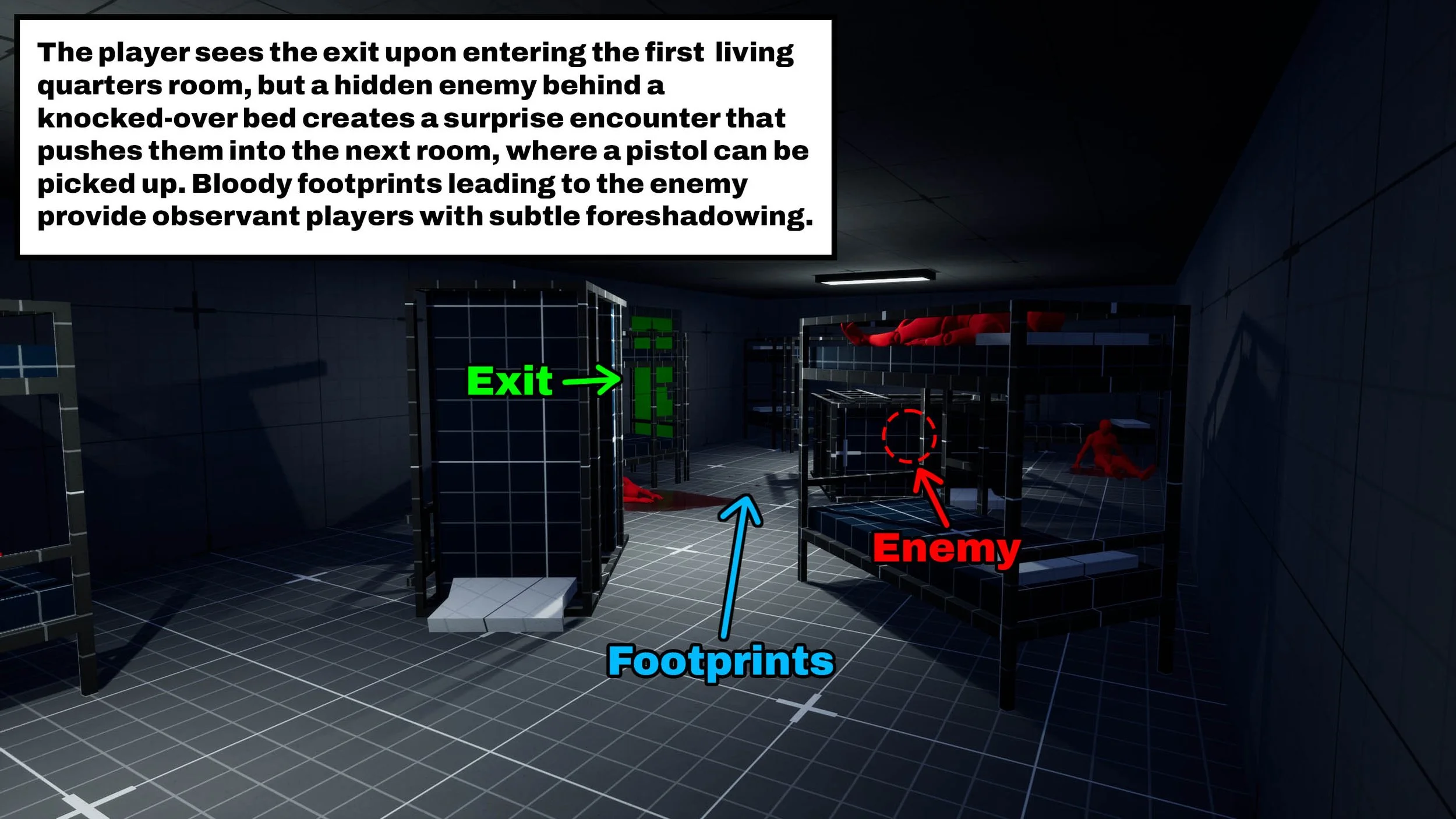
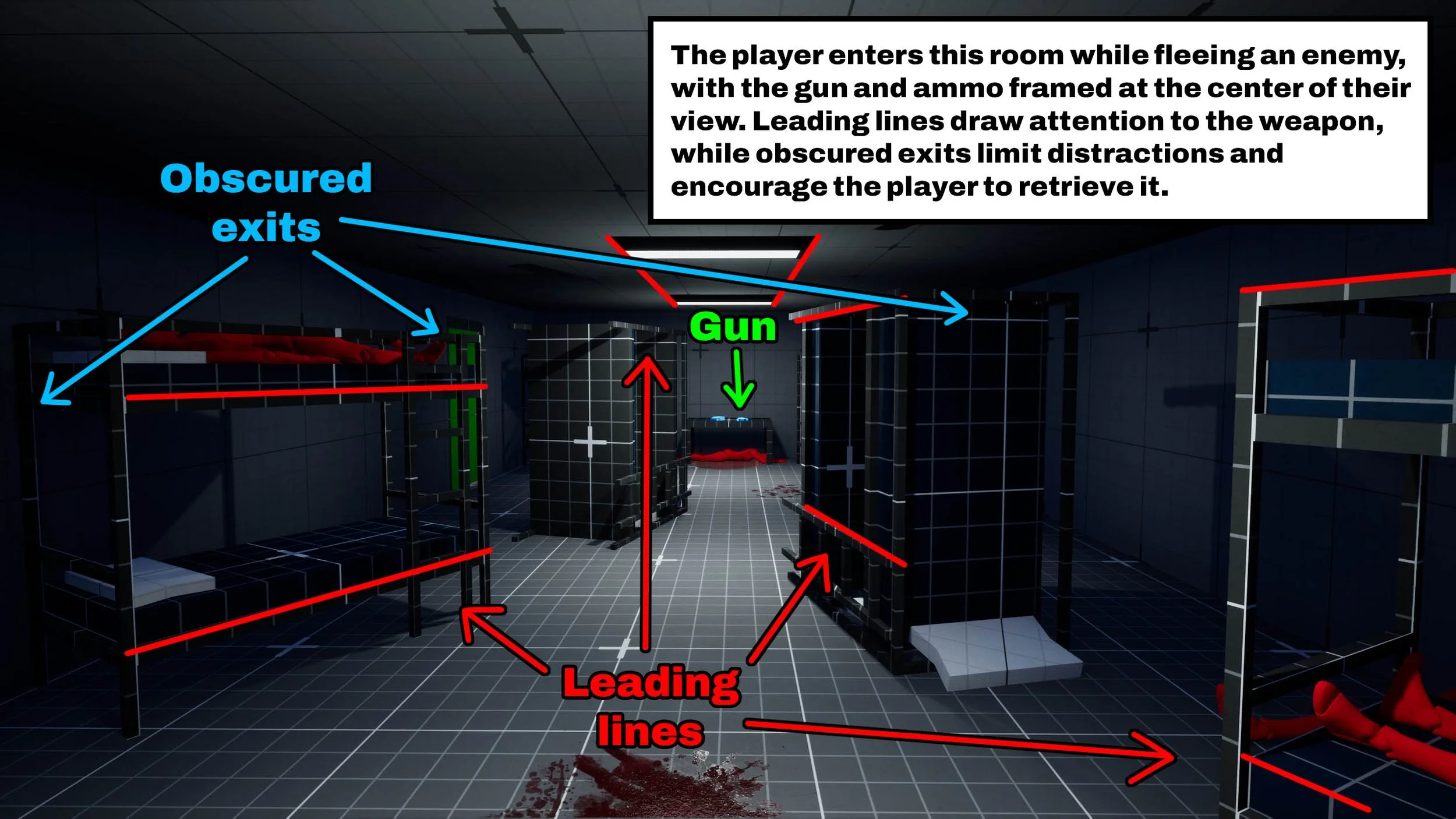
Entering the living quarters introduces the first enemy, startling the player and directing them toward a nearby weapon pickup in the next room
Features a locked locker in one of the side-rooms, encouraging players to remember and revisit the space for a future reward
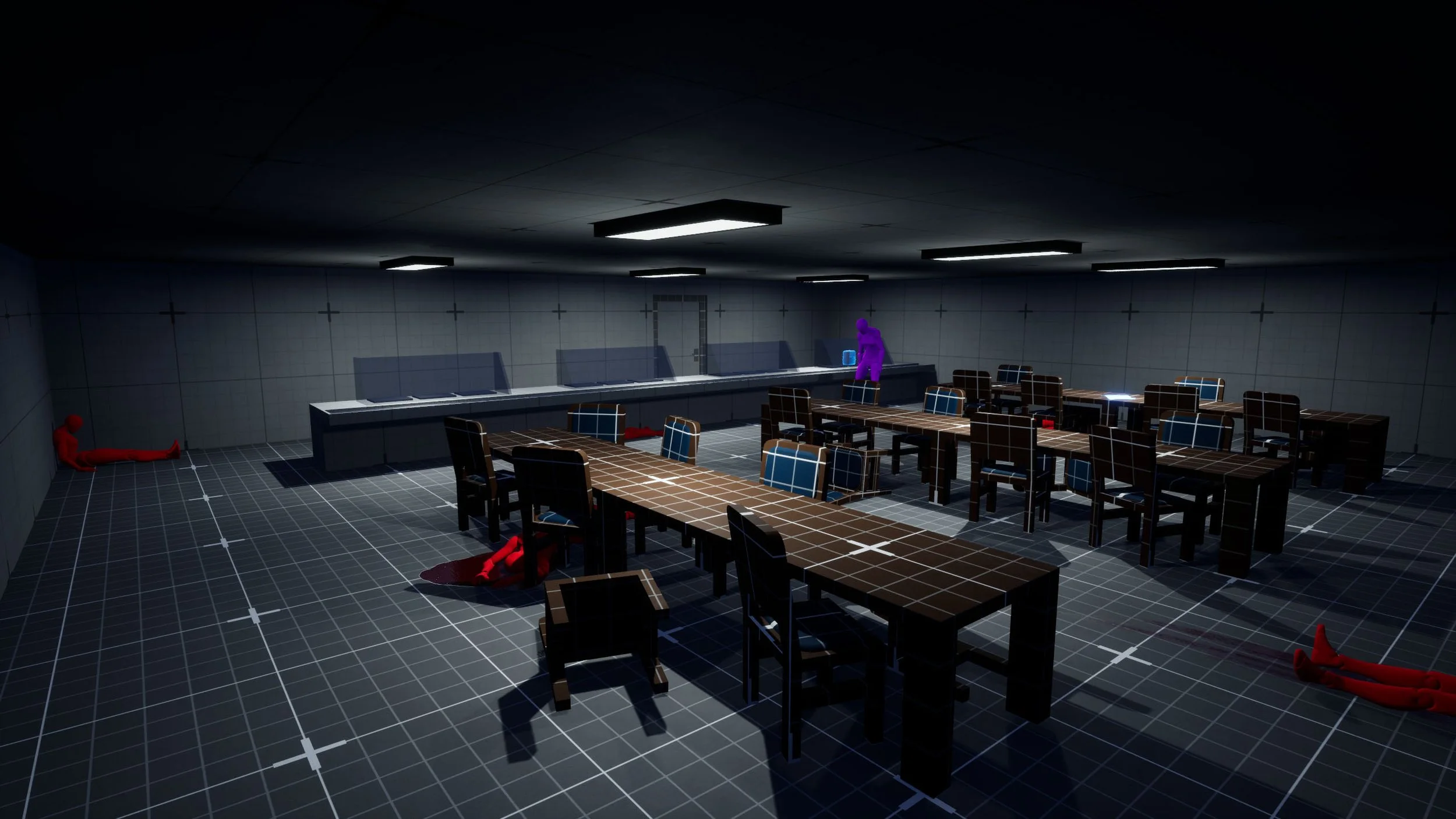
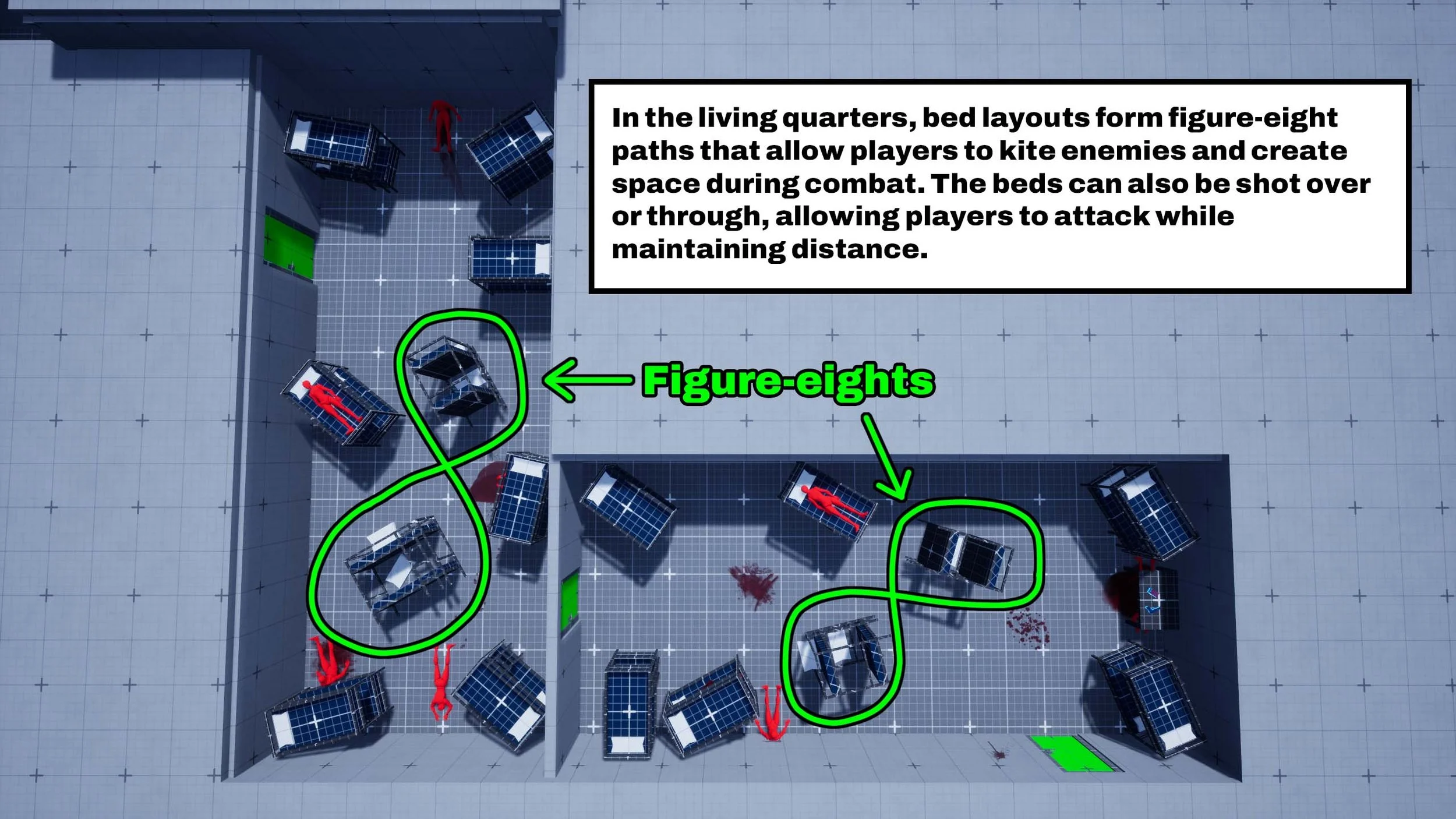
The cafeteria features a mini-boss whose dropped key unlocks the Communications Room, with a figure-eight layout designed for kiting
Backtracking through this area introduces new enemies as previously dead bodies in already explored rooms reanimate, creating new challenges in familiar spaces
Beat 2 - Communications Room
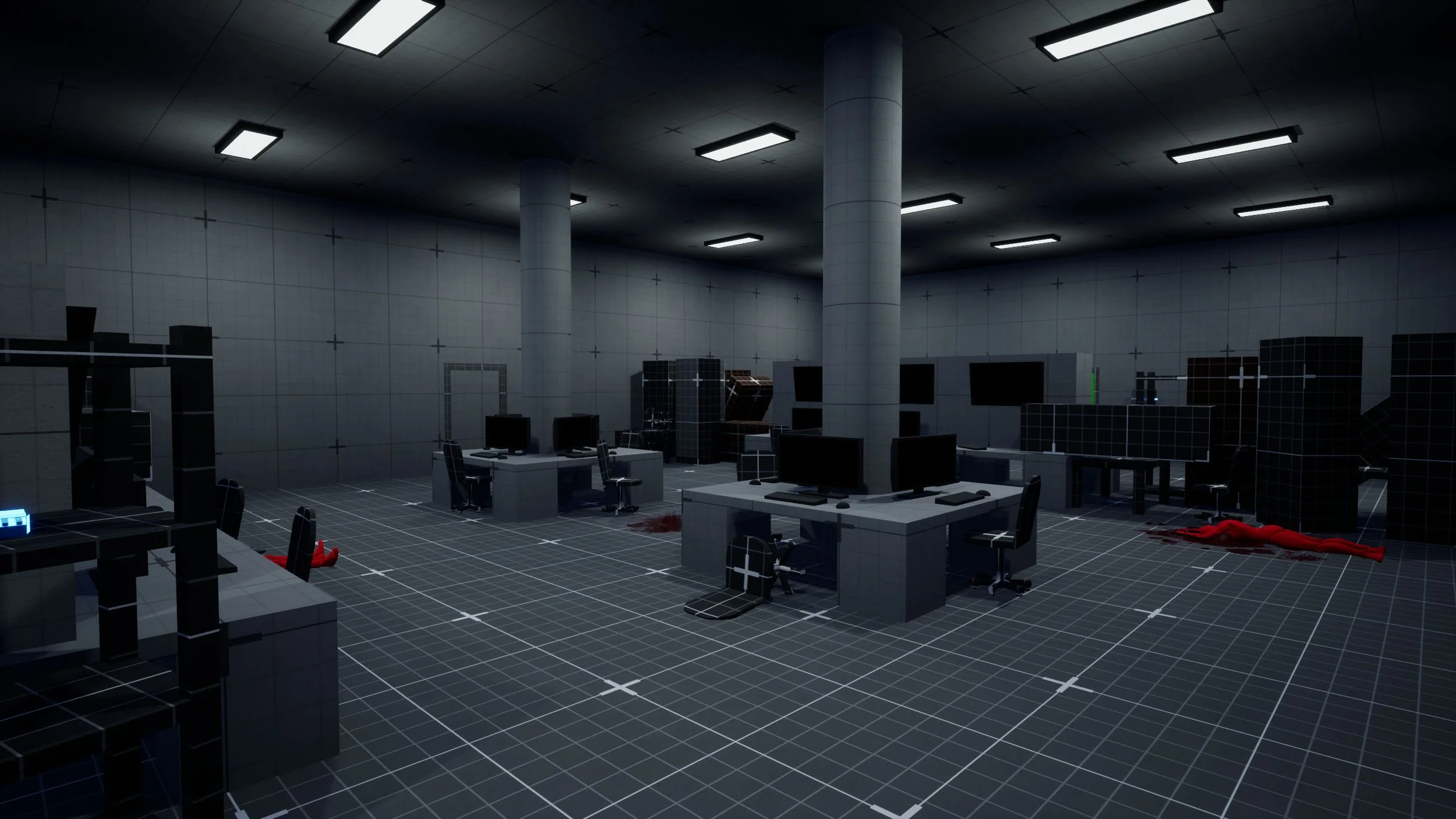
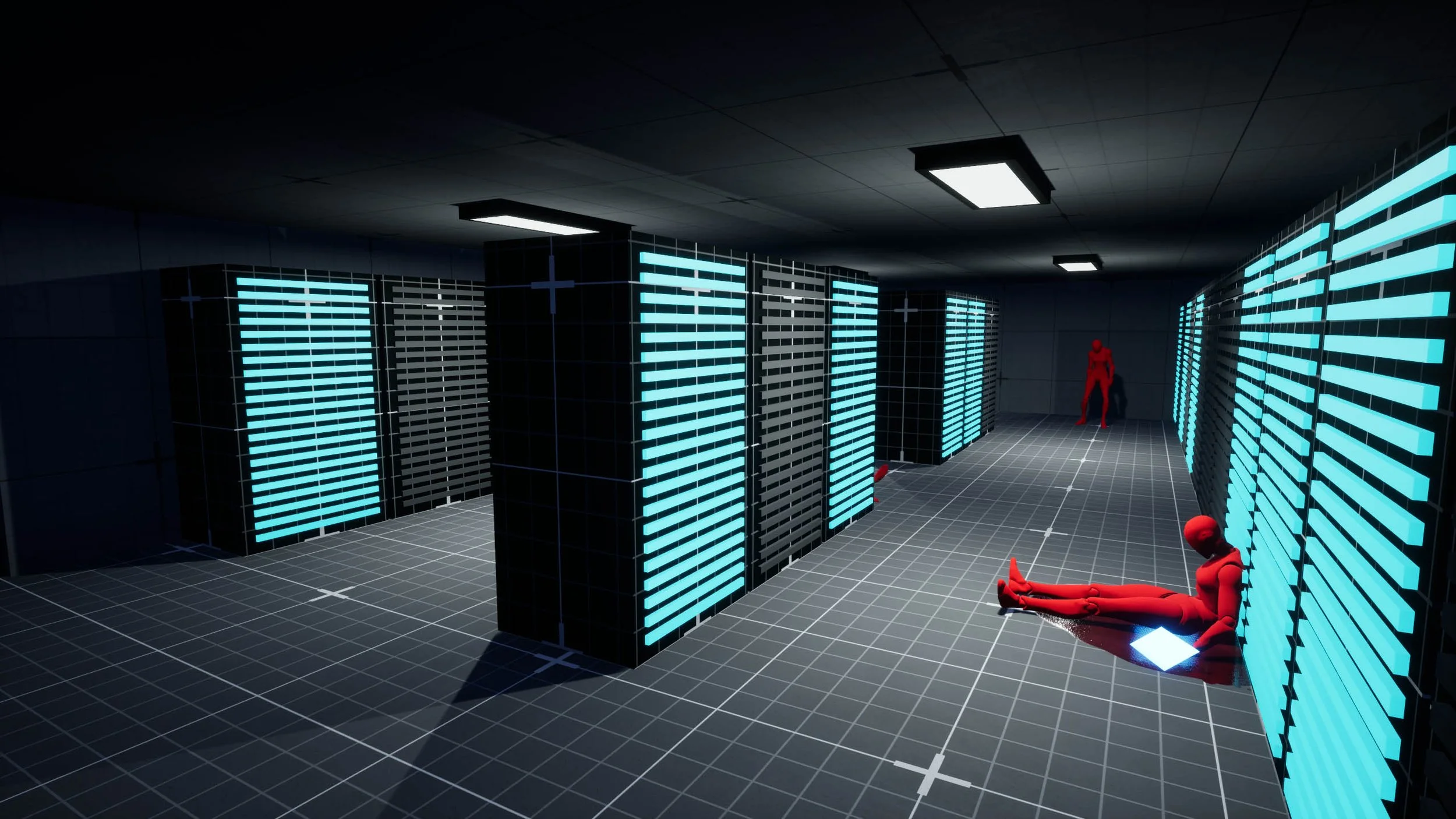
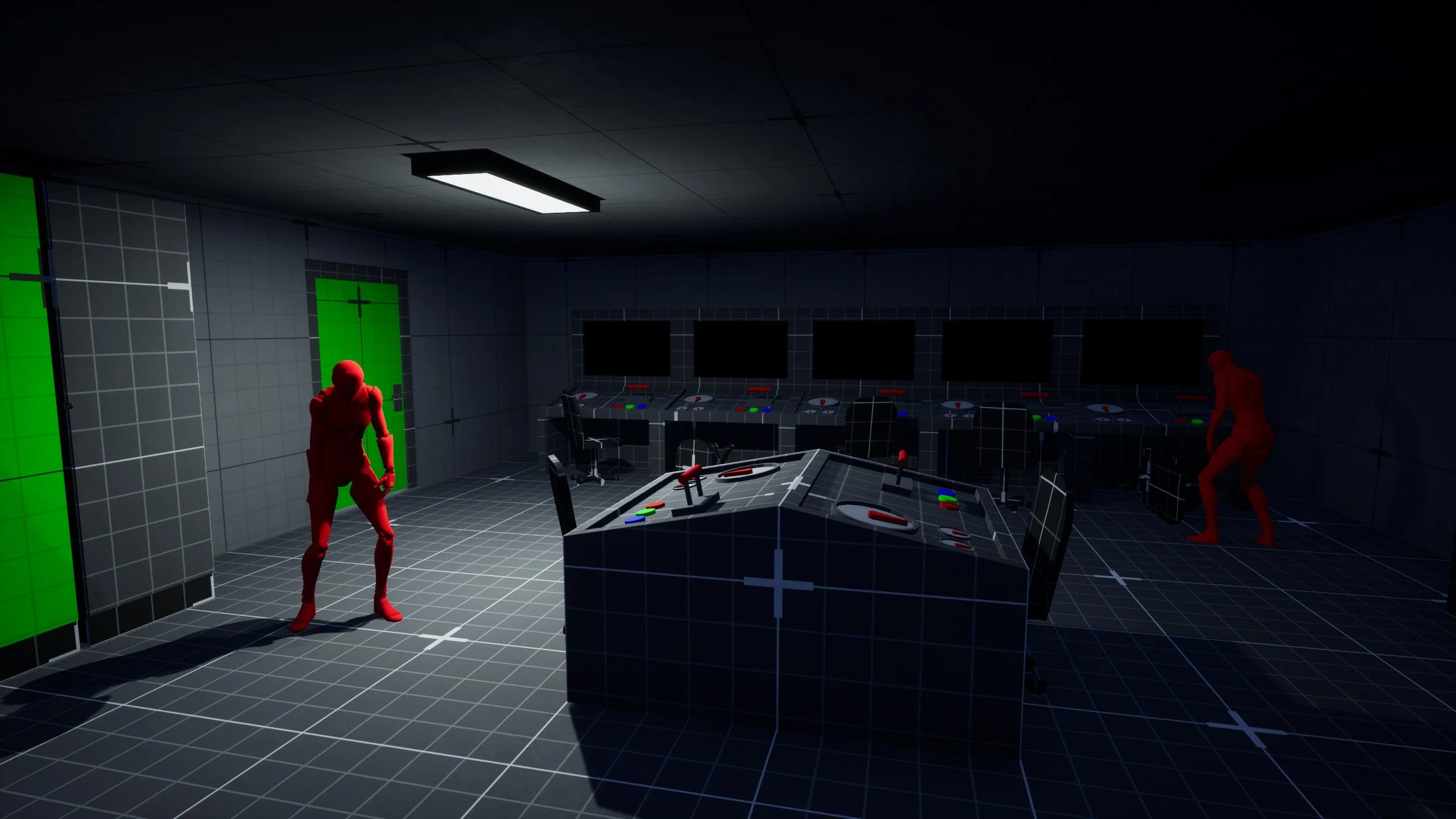
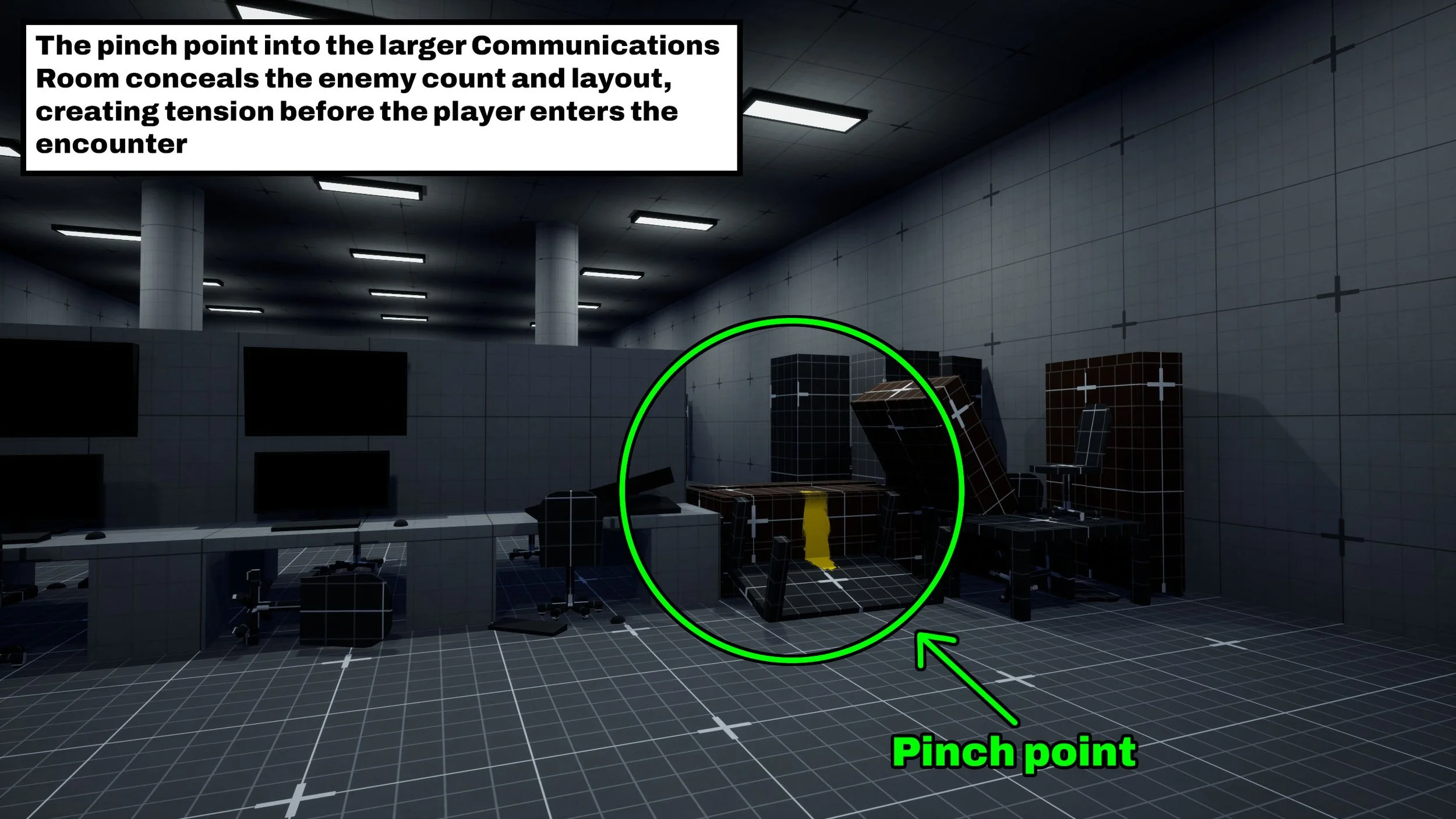
Centers around one large main room that utilizes pinching to control movement and sightlines, with figure-eight negative space creating manageable combat encounters
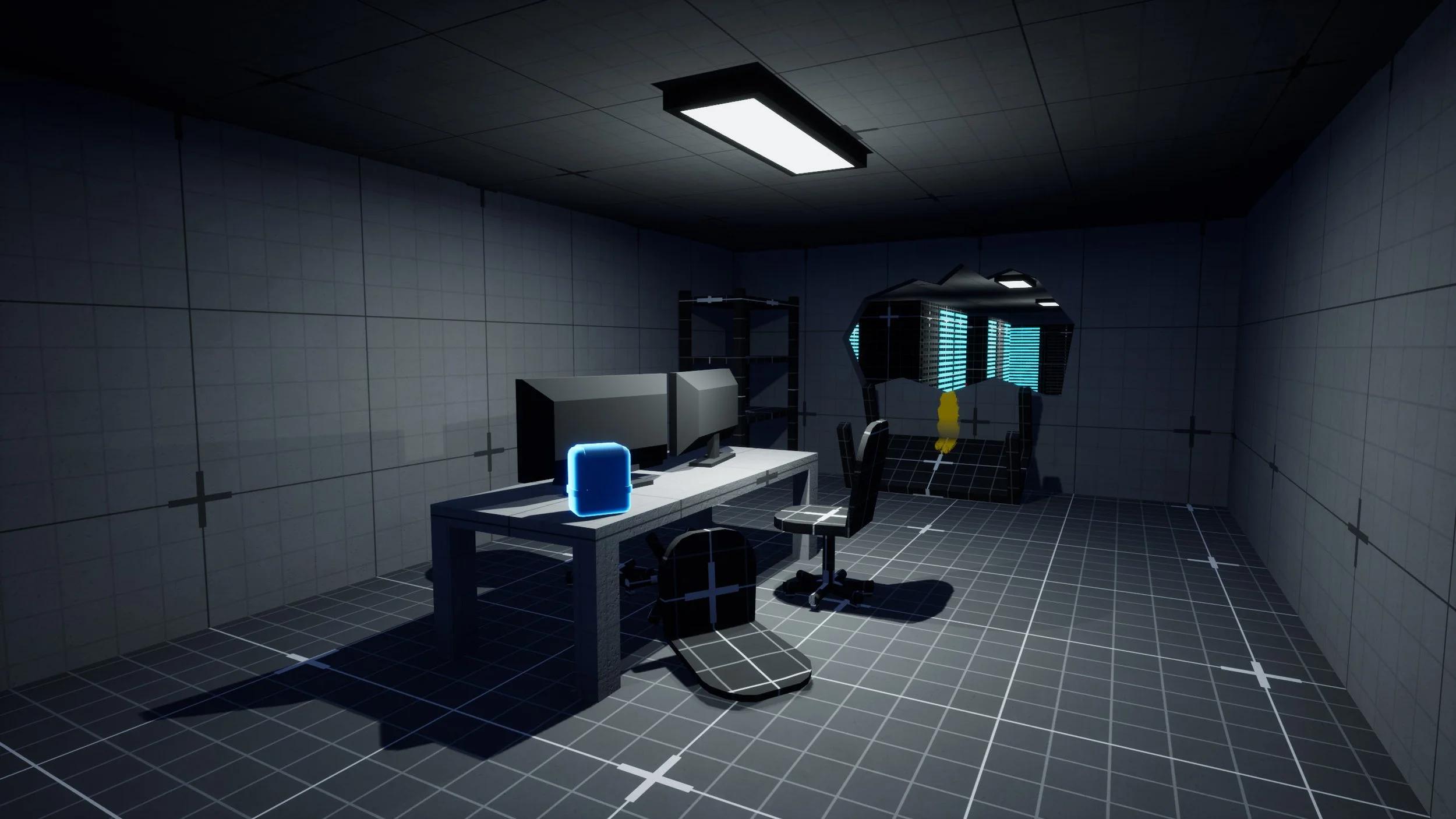
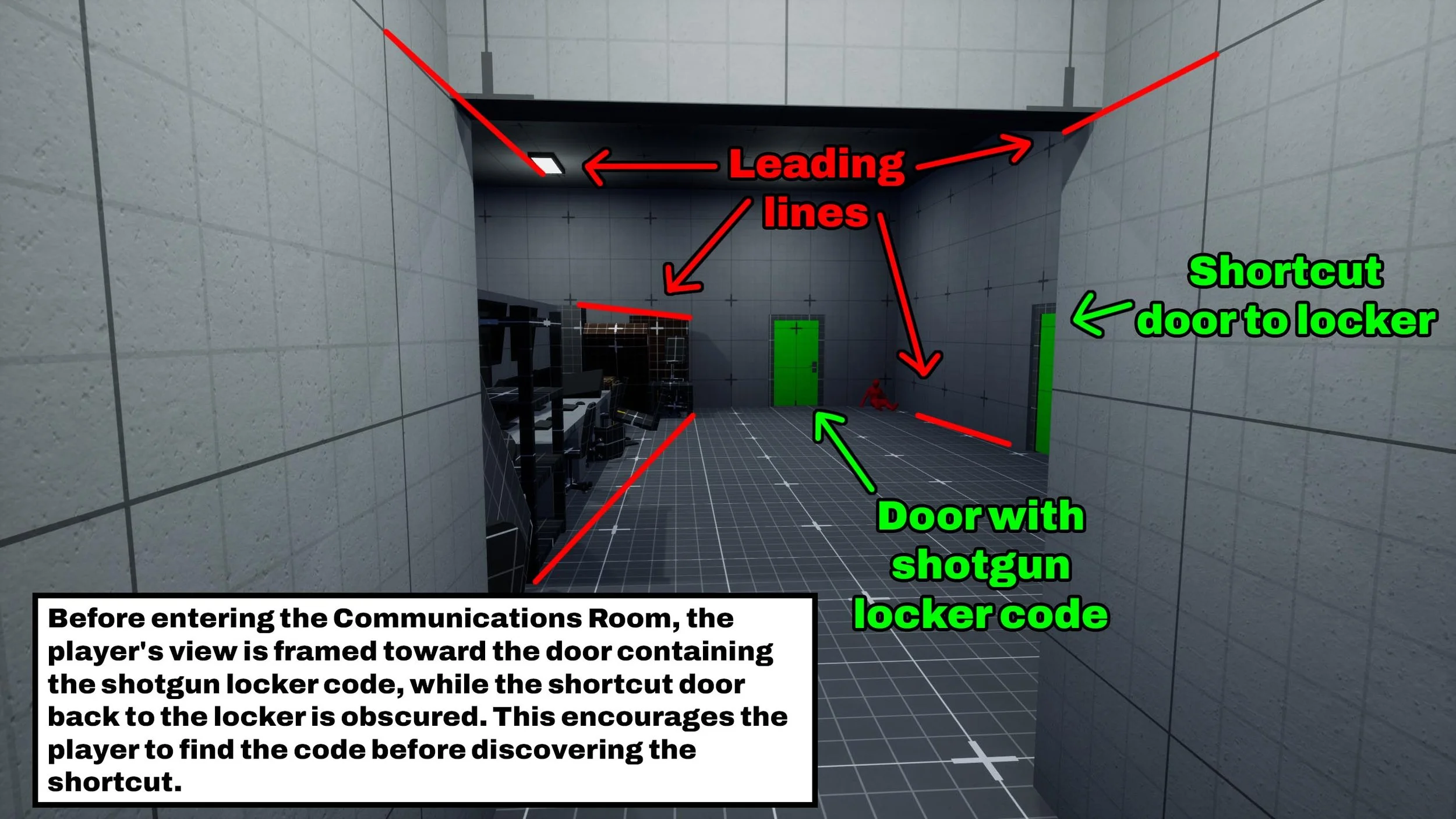
Rewards player memory by placing the code for the previously discovered locker in a side room and providing a shortcut back to the locker, allowing players to unlock the shotgun
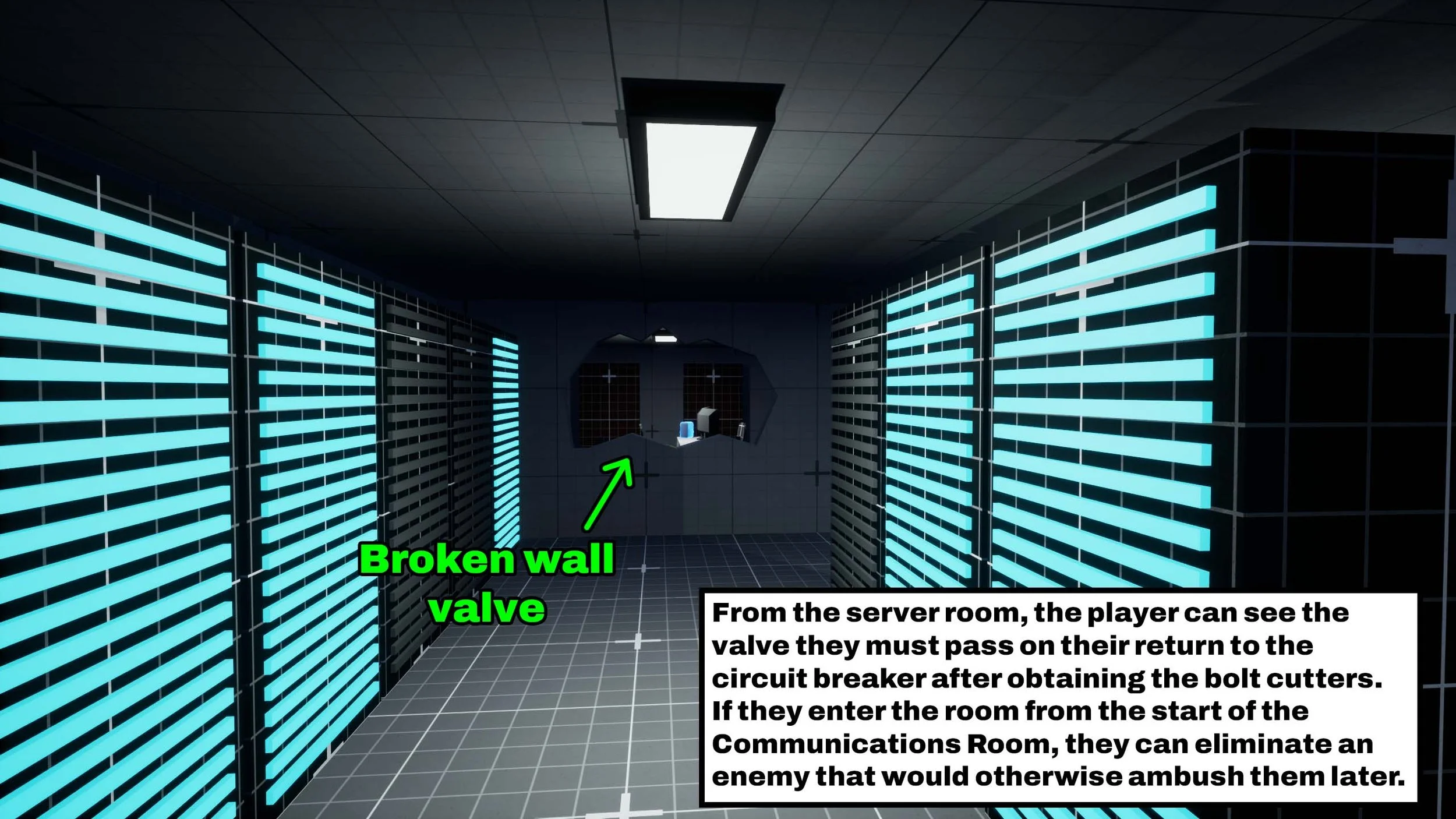
Uses gates and valves to control player flow and create a more directed progression through the Communications Room
After shutting off the power, the player’s return through the room is transformed as the lights go out and previously dead bodies reanimate, creating a higher difficulty backtracking sequence
Iterations
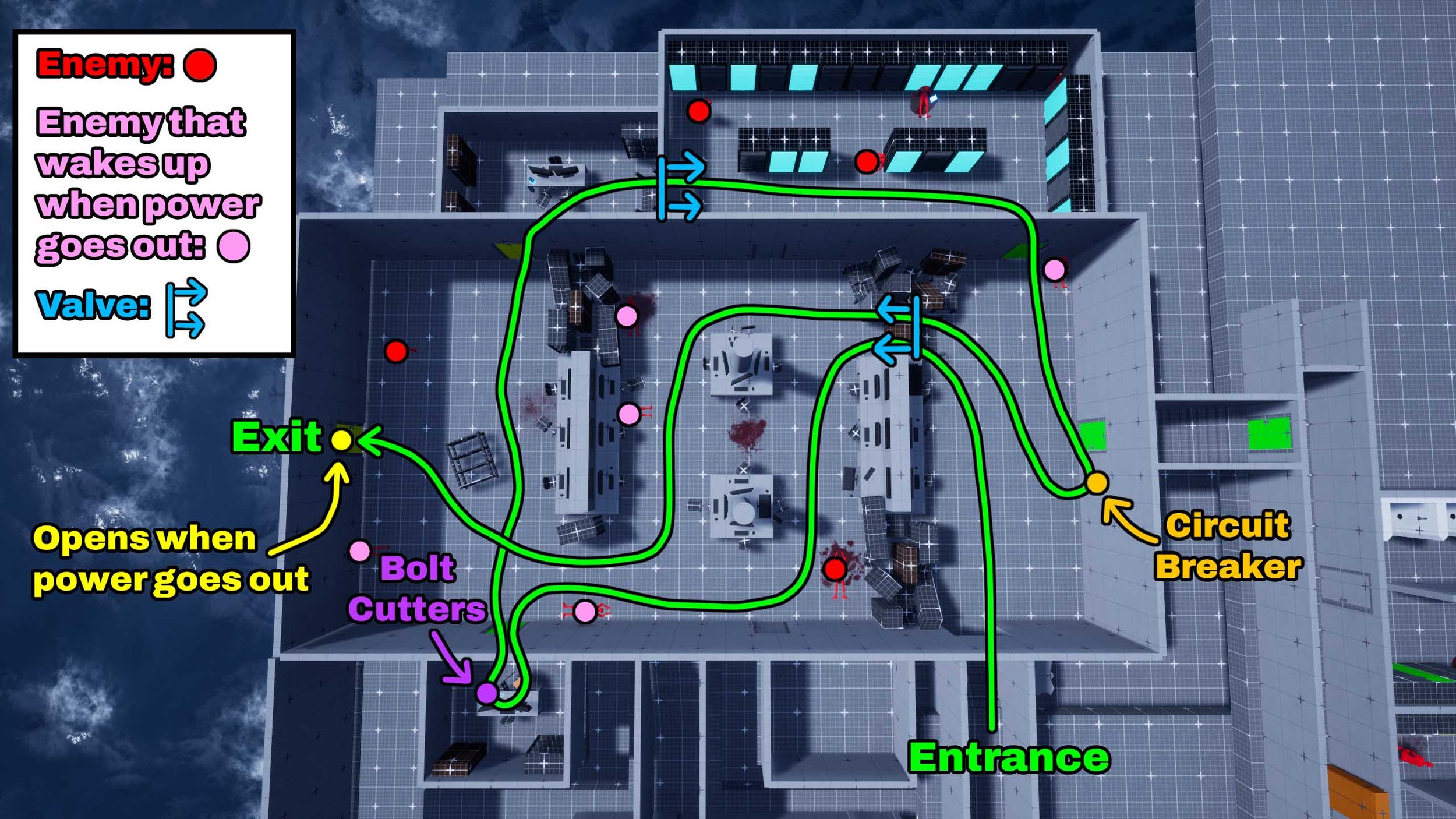
Old
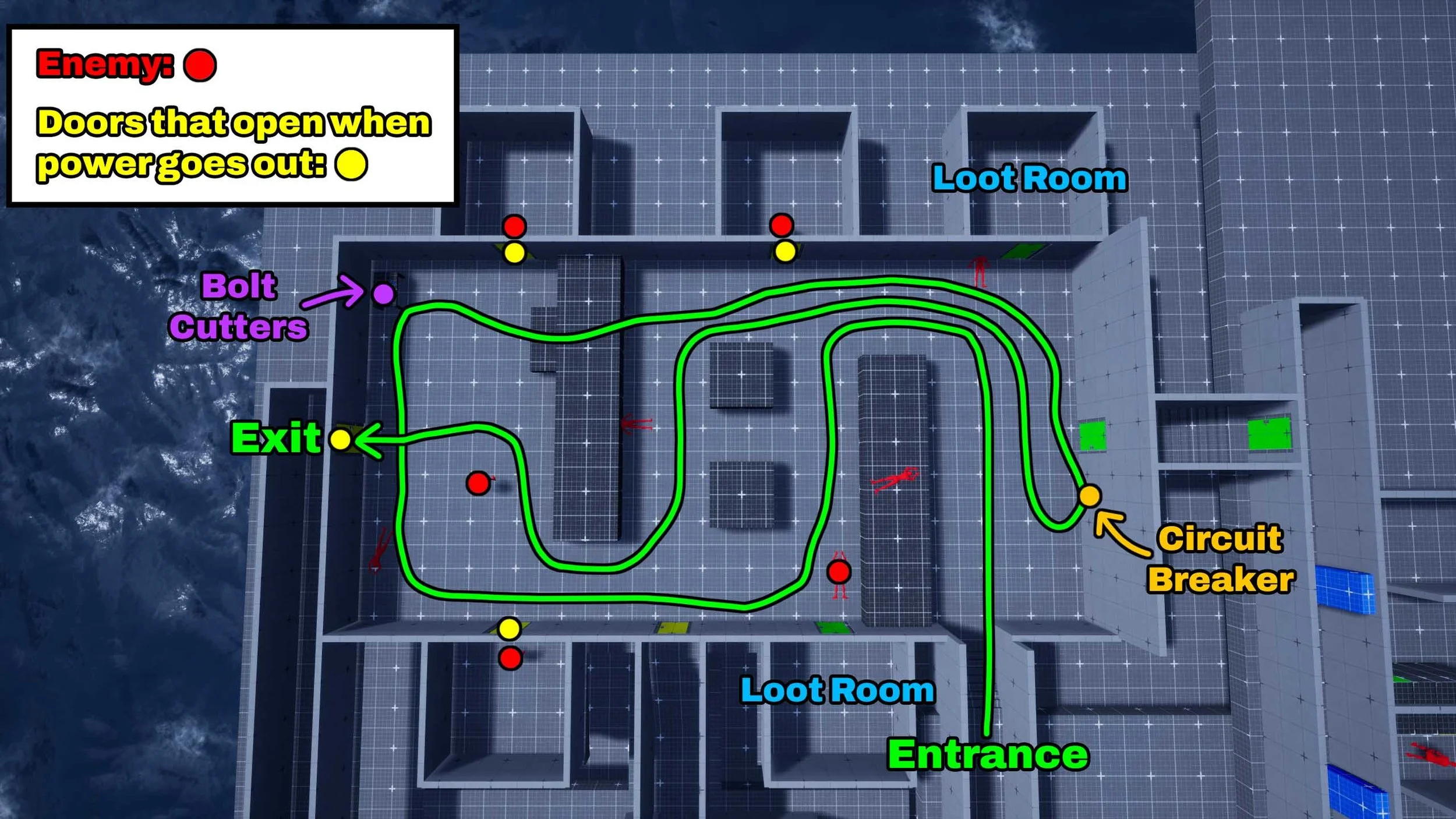
Bolt cutters were placed in an arbitrary corner, making progression unclear
Required players to fully traverse the same room three times
Shutting off the power unlocked four doors simultaneously, obscuring the intended path
Three doors contained only enemies with no meaningful reward
Multiple identical square rooms made exploration repetitive
New
Bolt cutters are now in the unlocked room past the first valve, making progression more intuitive
Replaced repetitive backtracking with a new route using the bolt cutters, creating a more varied return path
Reduced the number of traversals of the main room from three to two, with the second traversal transformed by darkness and even more enemies
Instead of hiding new enemies in rooms, all new enemies are reanimated bodies previously seen throughout the room, recontextualizing a familiar space while allowing players to predict and preemptively eliminate threats
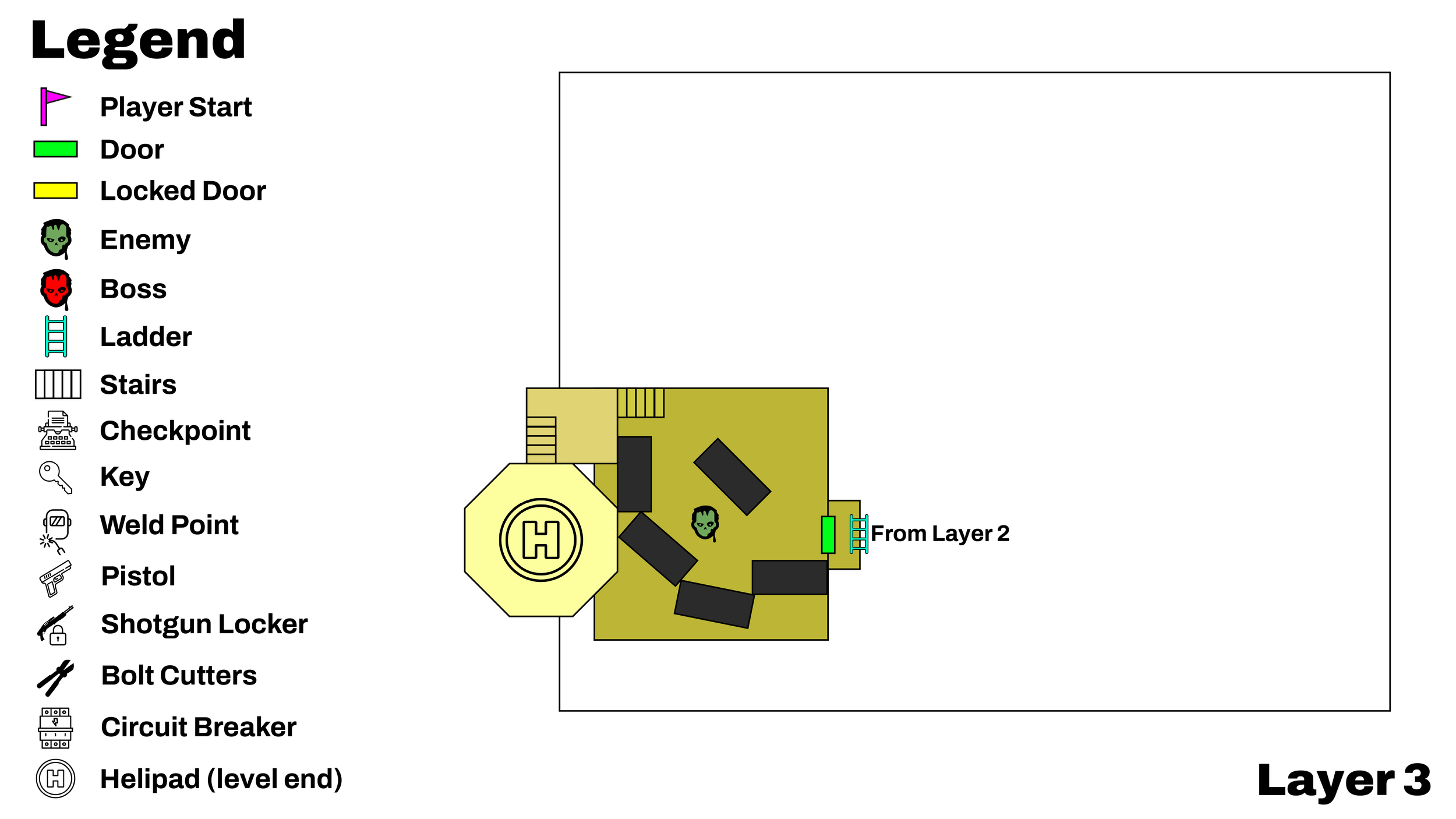
Beat 3 - Engineering Area and Escape
Uses tight combat spaces with multiple enemies to create pressure, while utilizing environmental objects and figure-eight layouts to support player movement and kiting
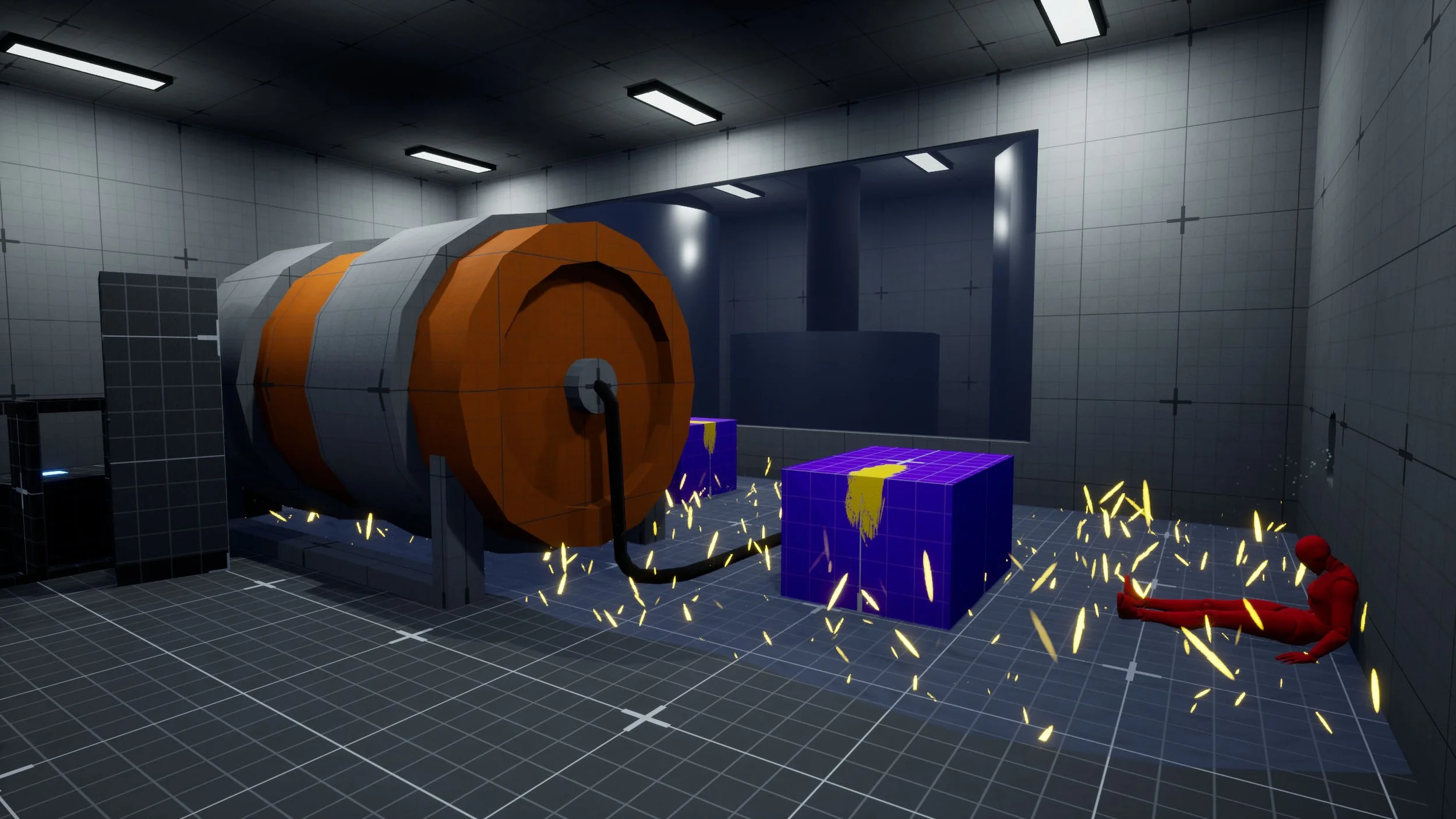
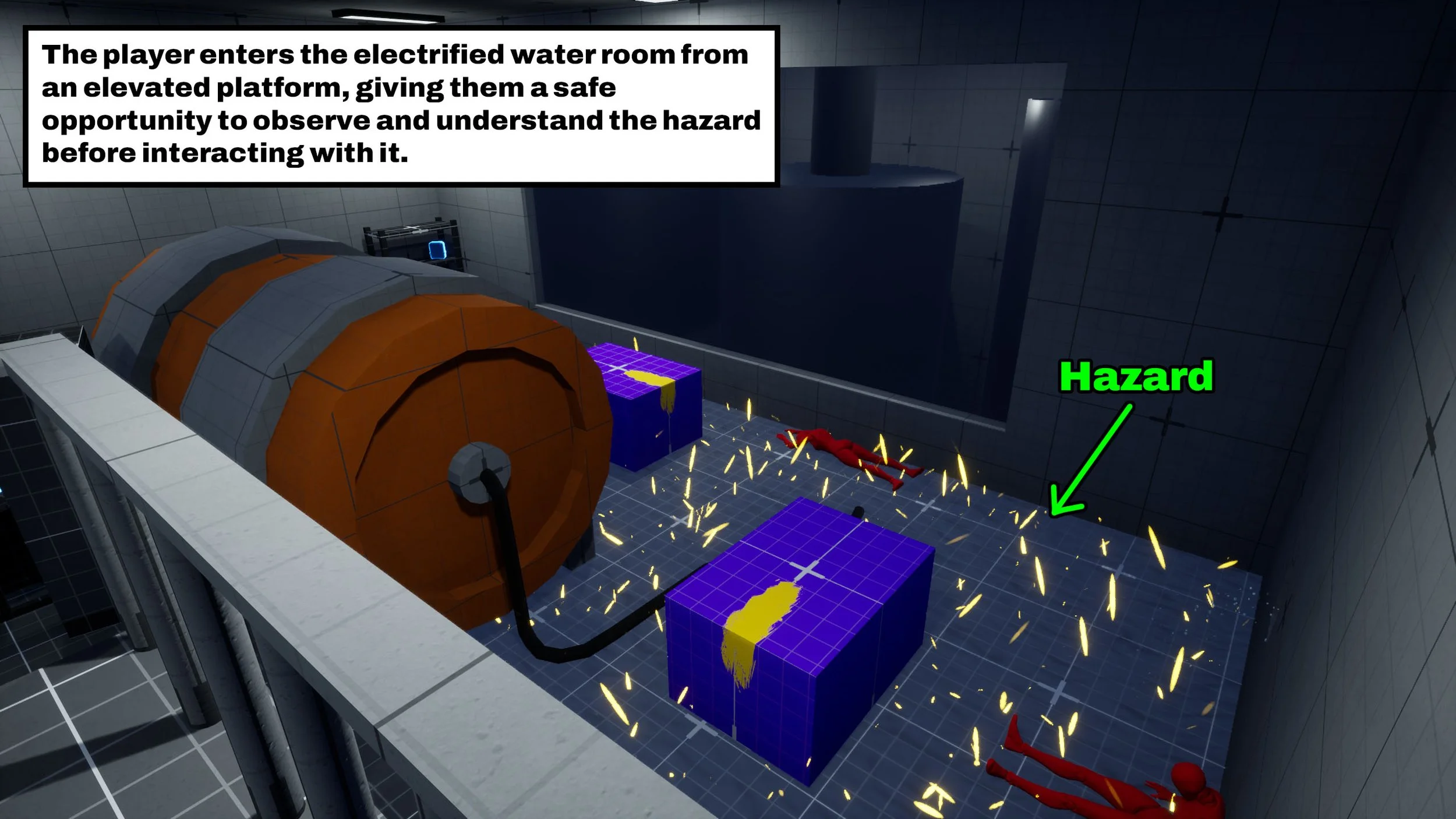
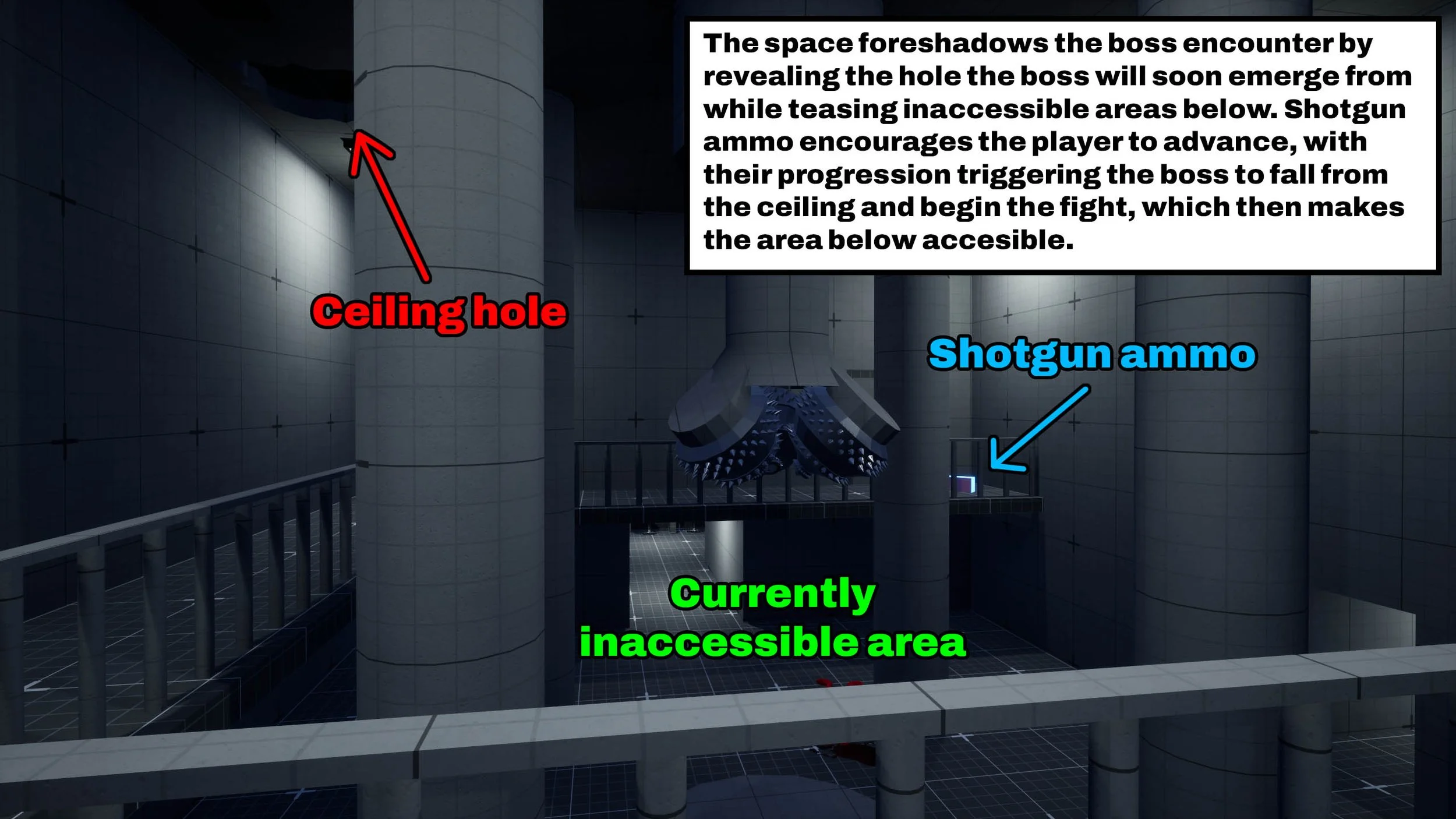
Introduces a puzzle requiring players to time movement around electrified water, while providing a note that foreshadows the boss encounter
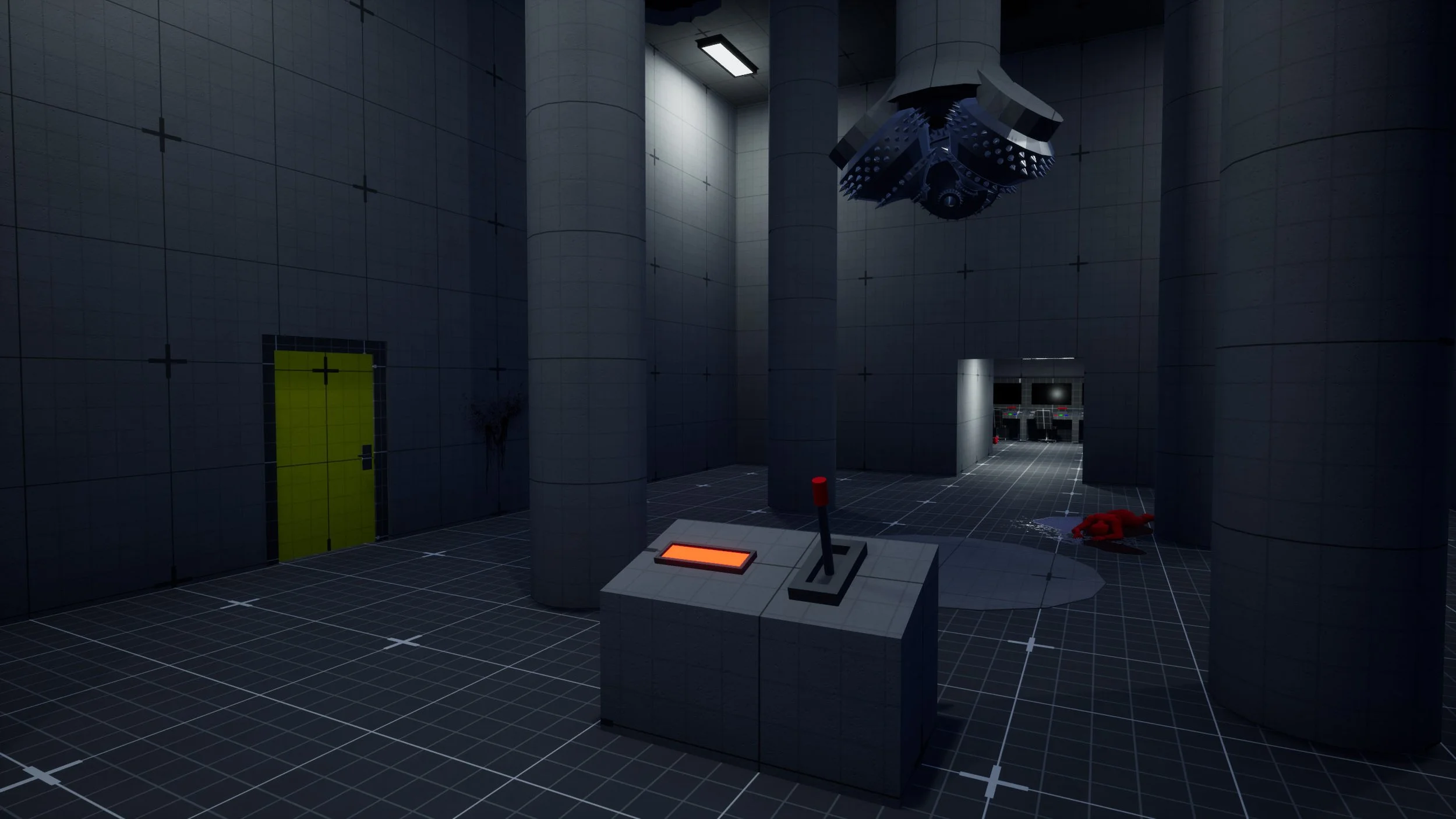
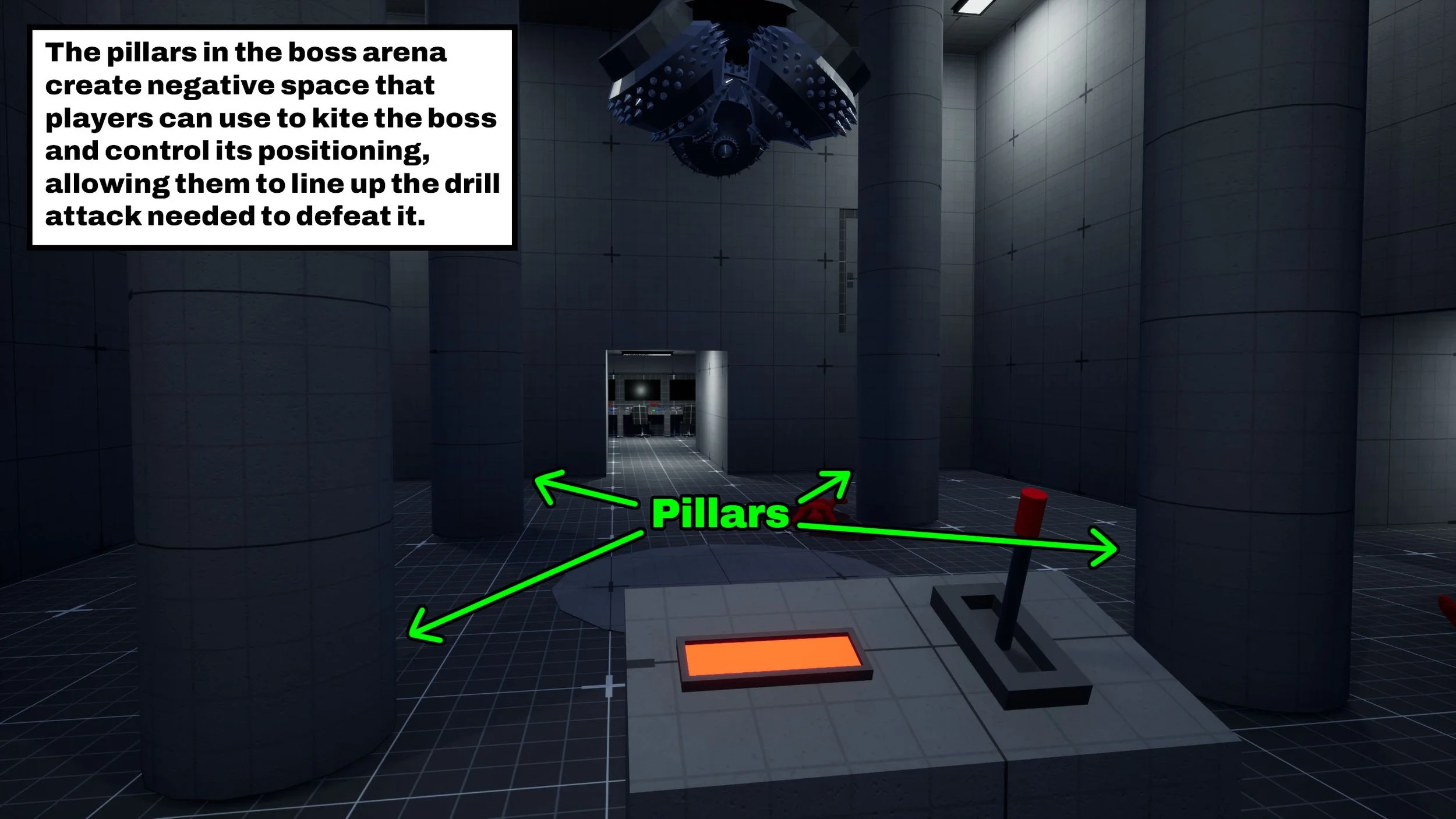
Boss fight requires players to explore the arena and use the oil rig drill to defeat the bulletproof boss, creating a unique encounter centered around environmental problem-solving
The player can stagger and slow the boss by shooting it, creating opportunities to reposition while executing the encounters puzzle mechanics
Concludes the level with a final combat sequence on the rig’s rooftop, providing a lower-pressure finale before the escape
Iterations
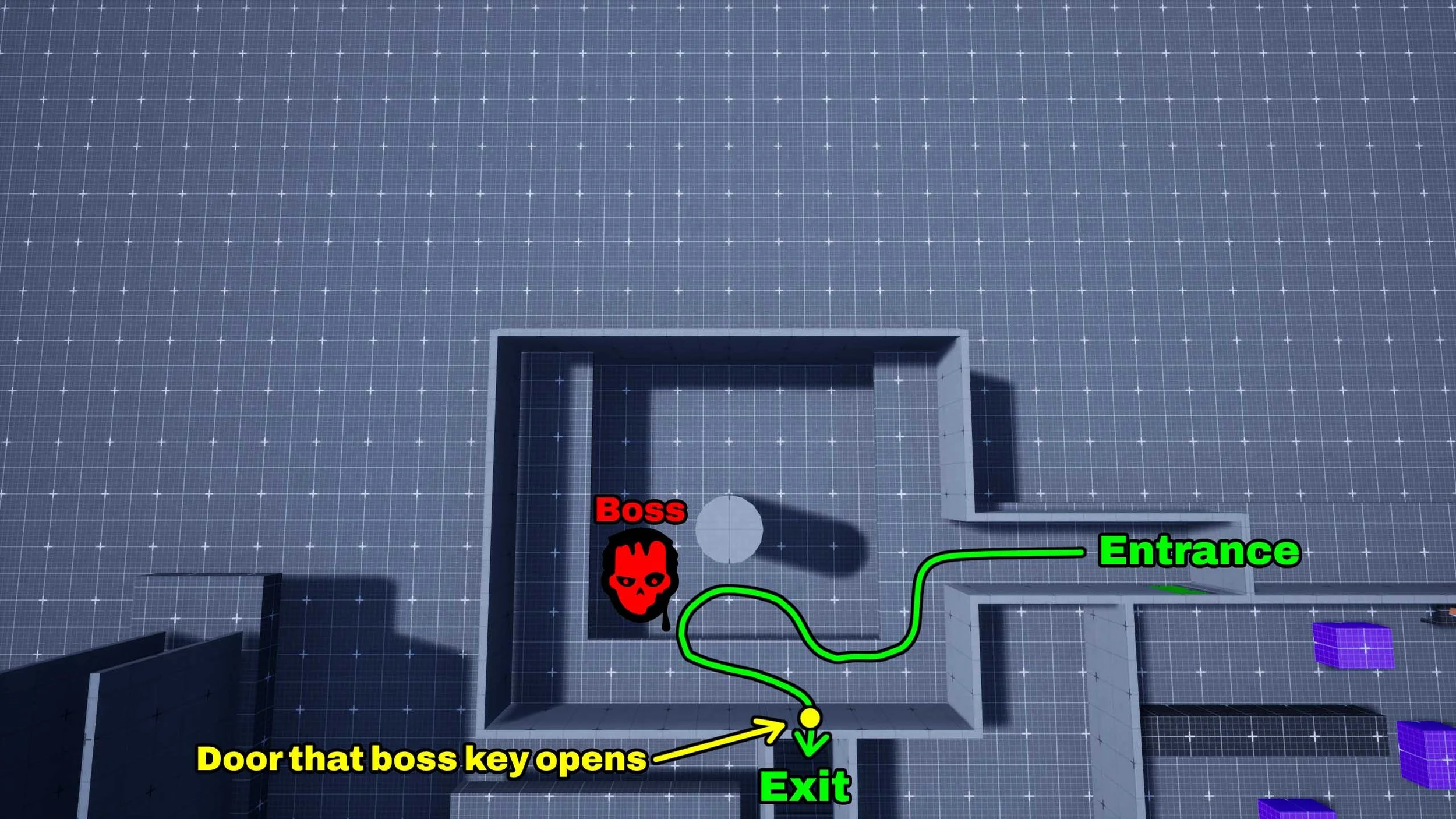
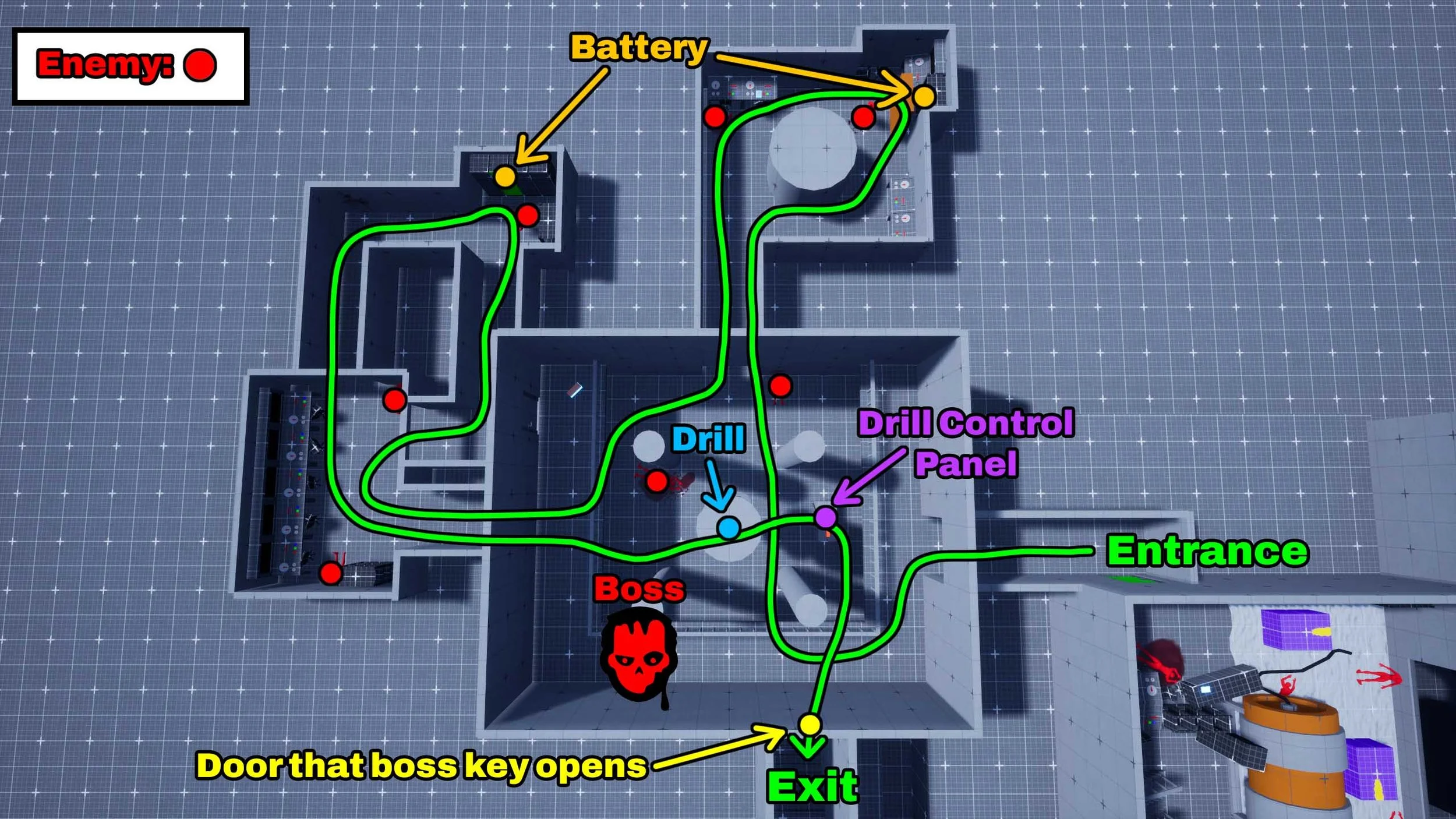
Old
Boss encounter featured an enemy with increased health and speed in a simple rectangular arena with one piece of negative space in the center
Was almost identical to the earlier mini-boss in the cafeteria, with an even more simple and boring environment
As the climax of the level and last challenging encounter before the end of the level, it was very underwhelming and simple
New
Changed the setting to the drill floor, creating a more memorable arena centered around the oil rig's drill
Added more negative space to the boss arena to create figure-eights in the layout, giving the player more room to maneuver during the encounter
Added new side rooms to the boss arena that heavily utilize negative space, creating escape routes that allow the player to retreat from the boss and reposition
Added basic enemies to increase pressure, creating a more challenging and satisfying climactic encounter
Made the boss bulletproof, requiring players to identify an alternative method of defeating it
Allowed players to stagger the boss with one or two shots, creating opportunities to slow it down and create space
Required players to explore two new side rooms to retrieve batteries that power the drill control panel
After restoring power, players must lure the boss beneath the drill before activating it to defeat the boss
Design Process
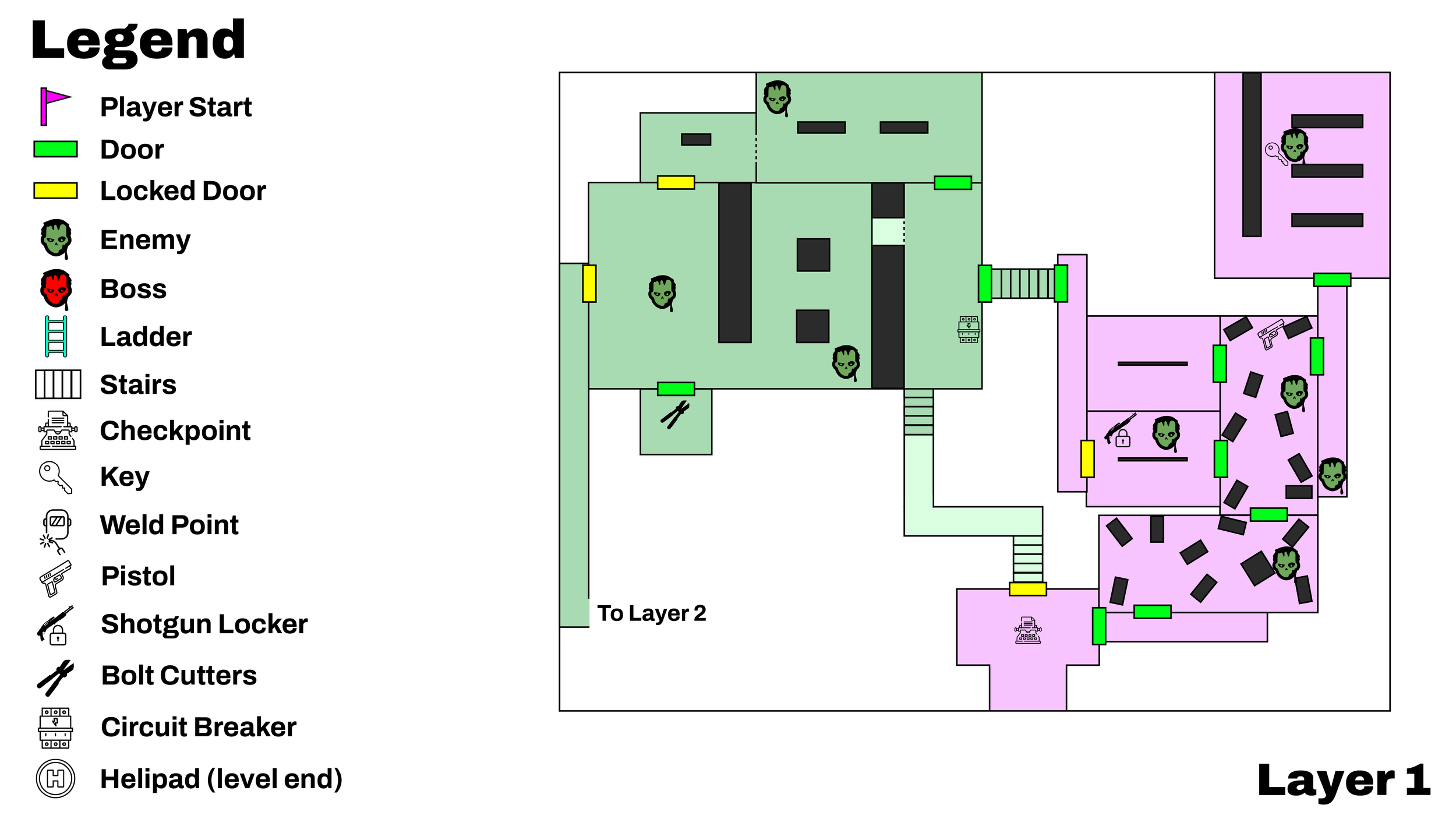
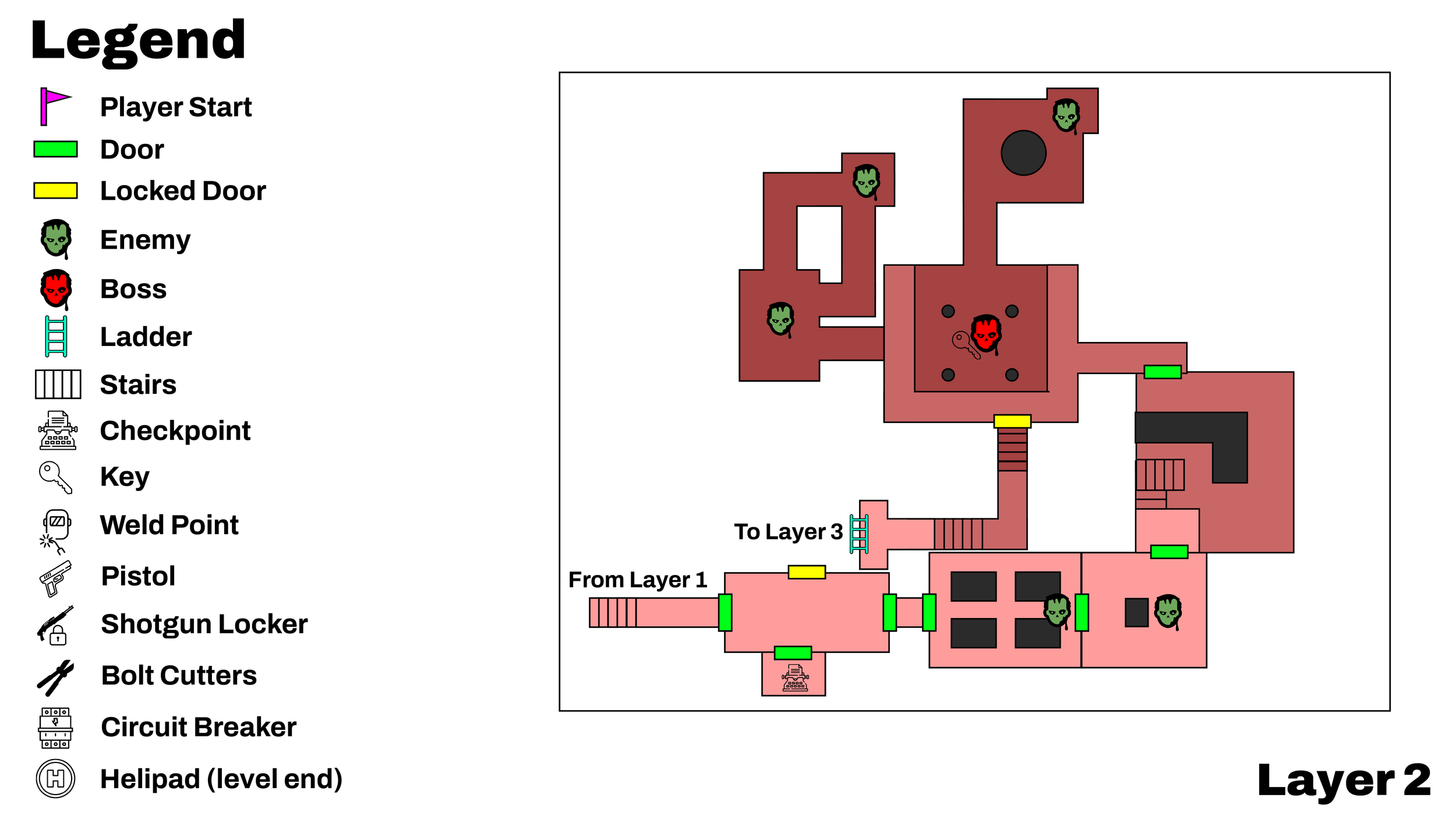
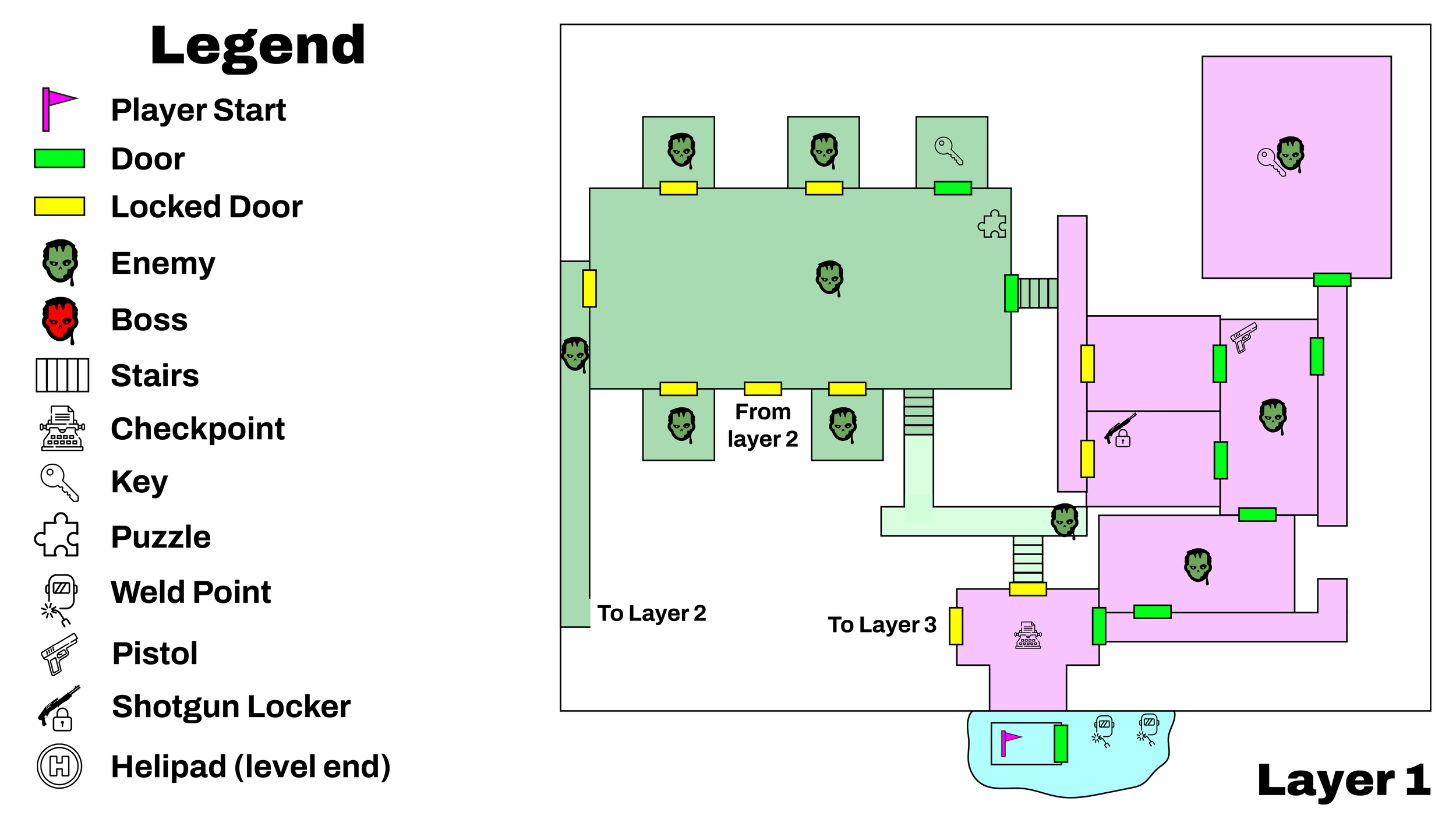
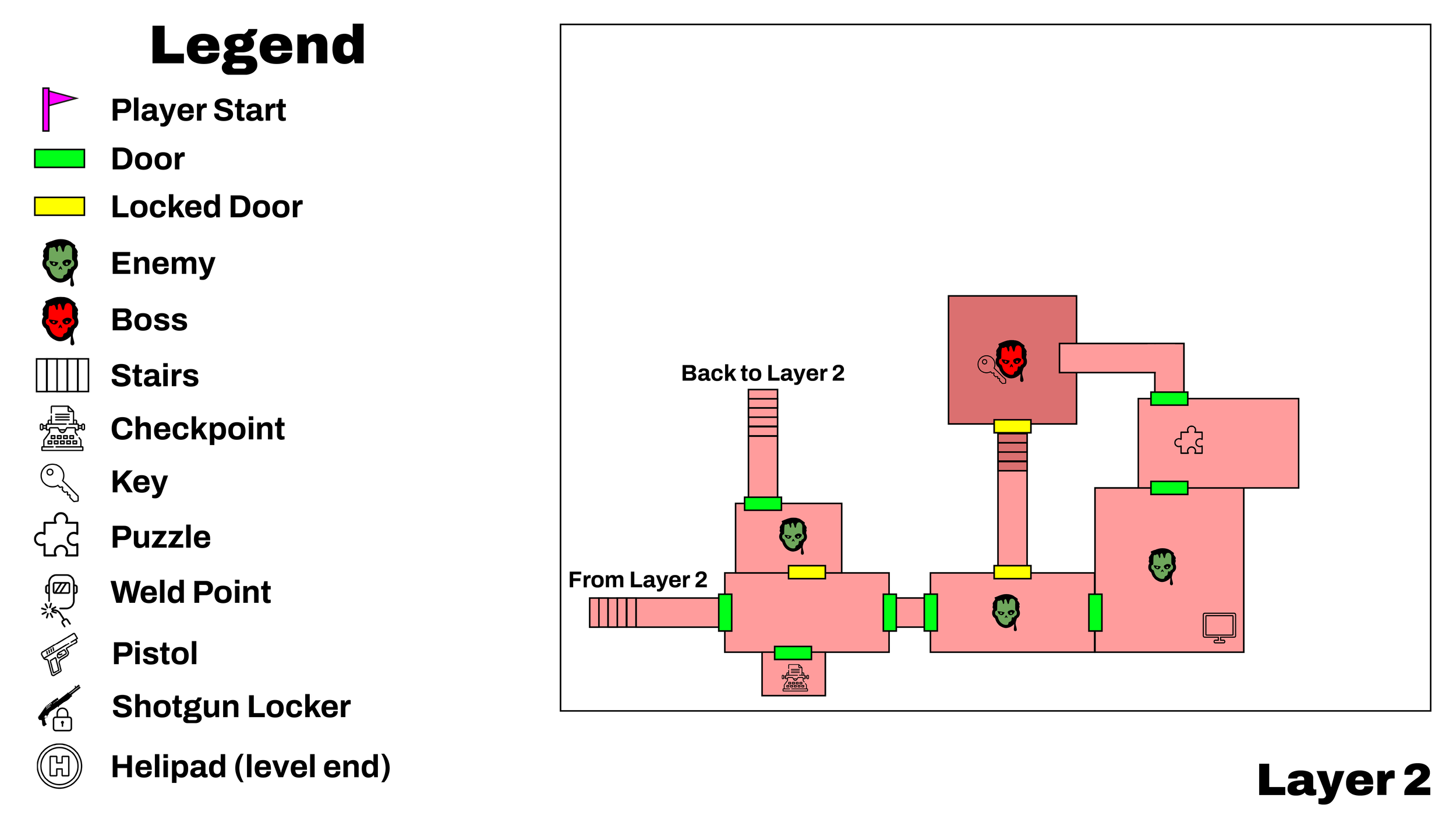
My goal for this level was to design and blockout a survival horror level based on the Resident Evil game series. I first created a Miro board with external references to inspire the level’s setting, narrative, and flow. I then wrote out every beat of the level within my Miro board so I could create my initial top-down map with more intention. When designing the top-down map, I took into consideration interconnectivity, as I wanted that to be a core element of my level.
Initial Layout
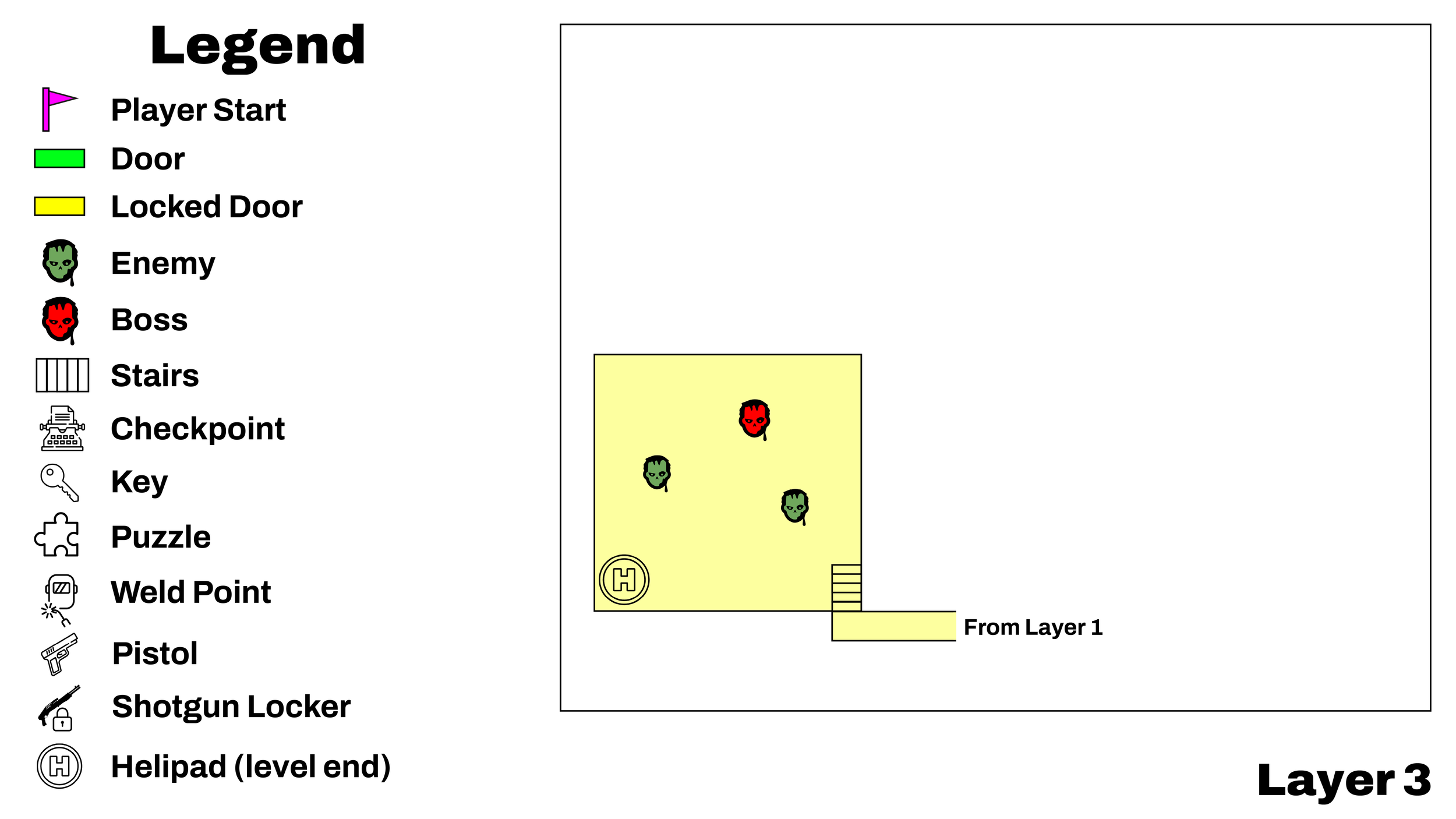
Reference Board
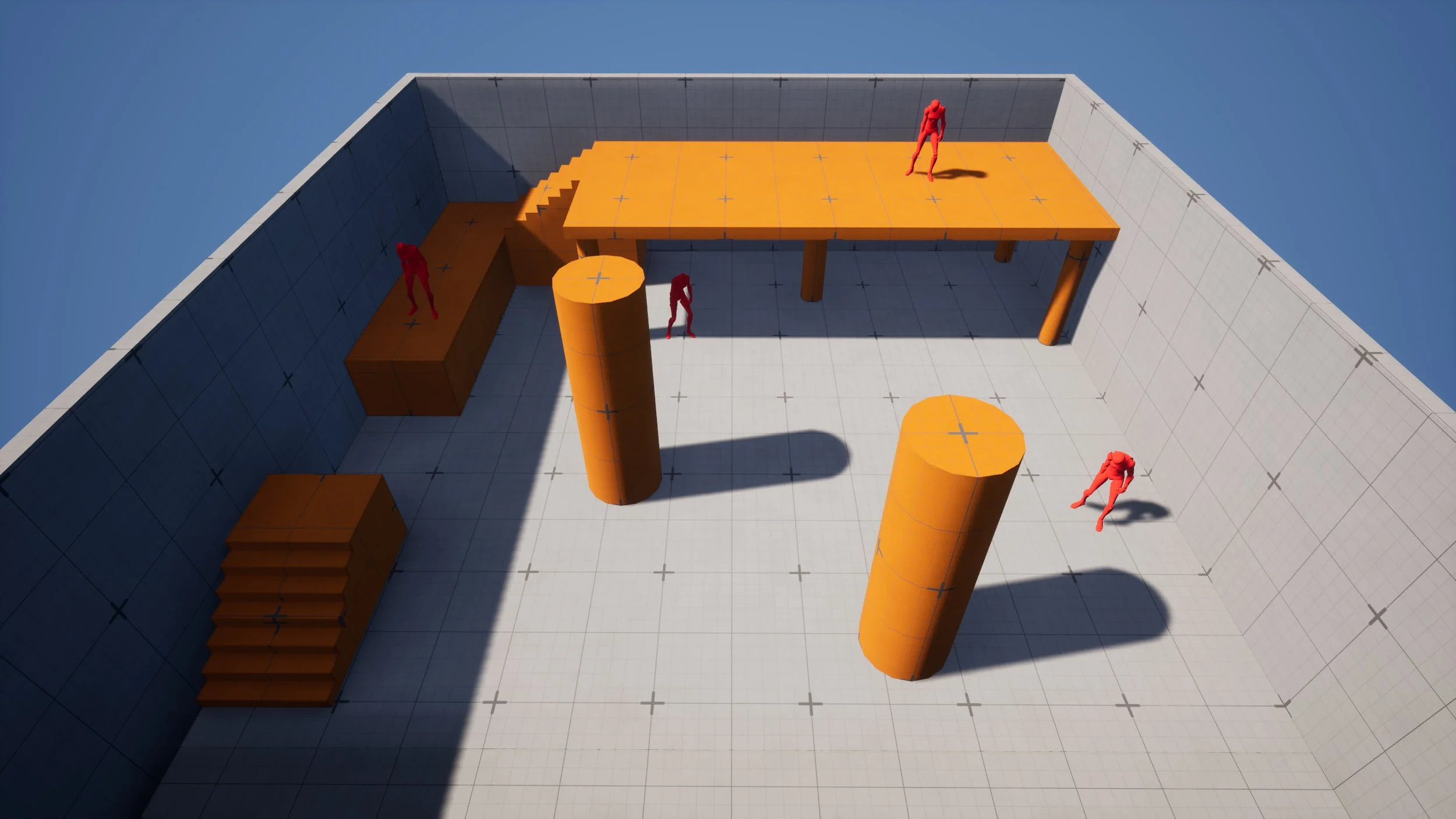
Metrics
After creating my map and Miro board, my next step was to finalize the metrics for my level, such as door, wall, and stair dimensions. To do this, I created a metrics gym to help establish the measurements I would be using.
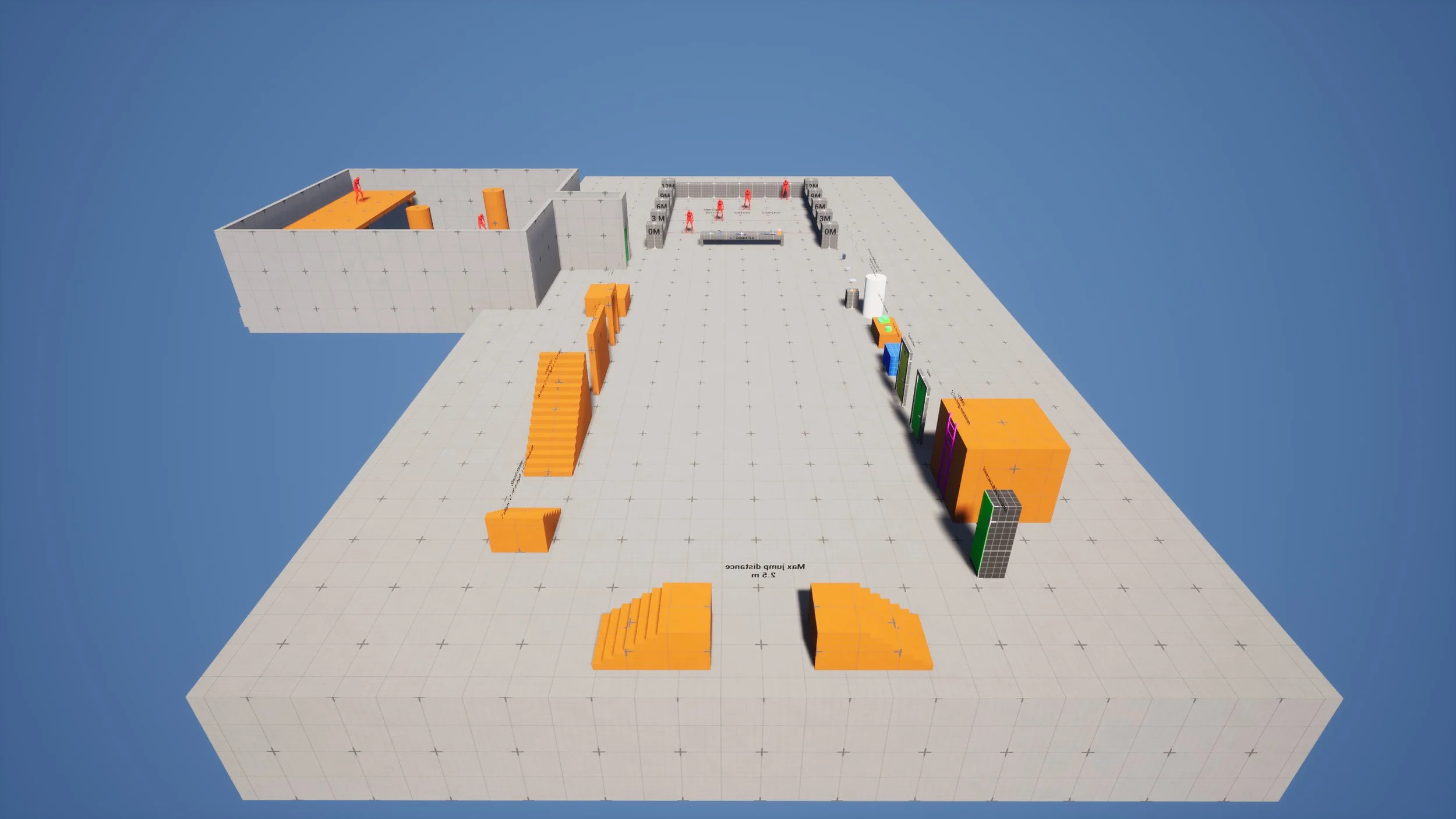
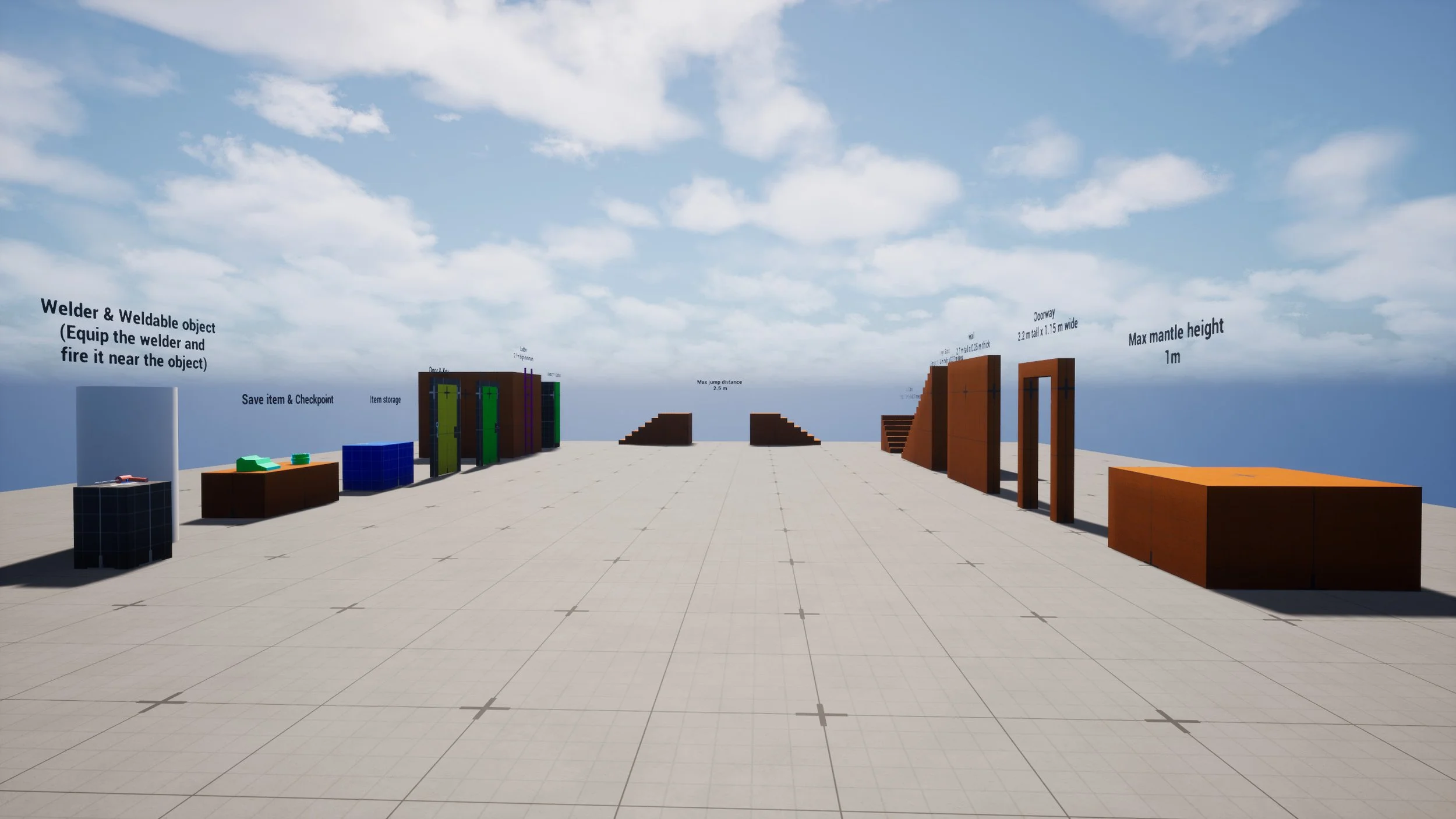
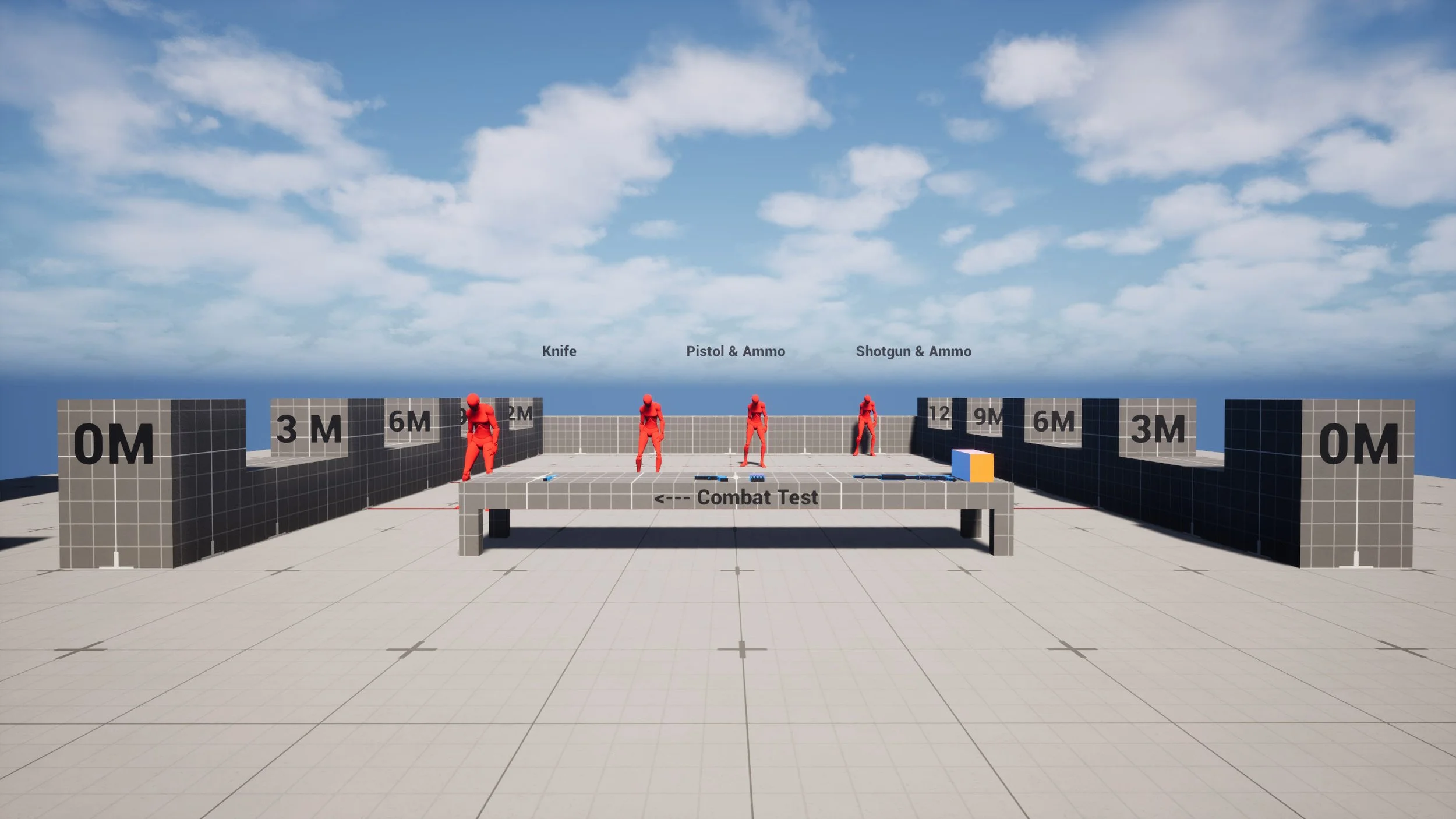
Blueprints
Welder and Weldable Object - Actor Blueprints
Circuit Breaker - Actor Blueprint
Electrified Water Hazard- Actor Blueprint
Start Boss Encounter - Actor Blueprint
Oil Rig Drill and Control Panel - Actor Blueprints